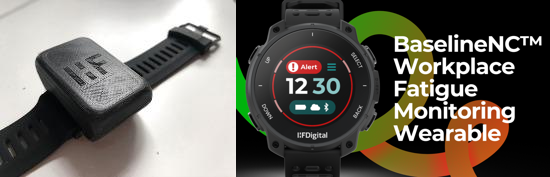
The Evolution of BaselineNC
Beginning as the Driver Innovation Safety Challenge (DISC), through to FOCUS+ and now BaselineNC, the project has seen the collaboration of academia, medical experts and industry to develop a world leading workplace fatigue monitoring system that can help save lives, reduce risk and deliver efficiencies in public transport but also across other industry sectors and safety-critical job roles.
First Prototype (Left) and Latest Version (Right)
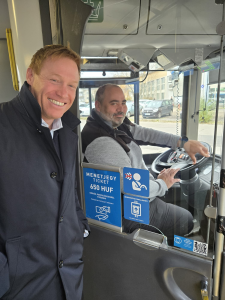
Leading to a wider EIT Urban Mobility funded project involving Edinburgh Trams, DKV Debreceni Közlekedési Zrt. and Edinburgh Napier University, providing valuable data on how the system functions across different modes of public transport.
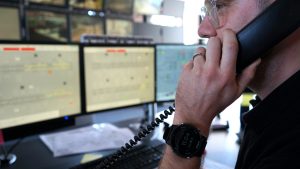
Recent evolutions include the development of Android™ and iOS® mobile applications, improvements to real-time dashboard visualisations and the development of AI-powered data analysis and insights functionality.
BaselineNC is also now part of the AVEVA™ Partner Ecosystem, supporting the protection of the human asset by further enabling the “human sensor” with a “predictive maintenance” approach.
The BaselineNC Workplace Fatigue Monitoring Wearable has also been featured as part of the EIT Urban Mobility Impact Stories series: Wearable technology for human error prevention in transportation
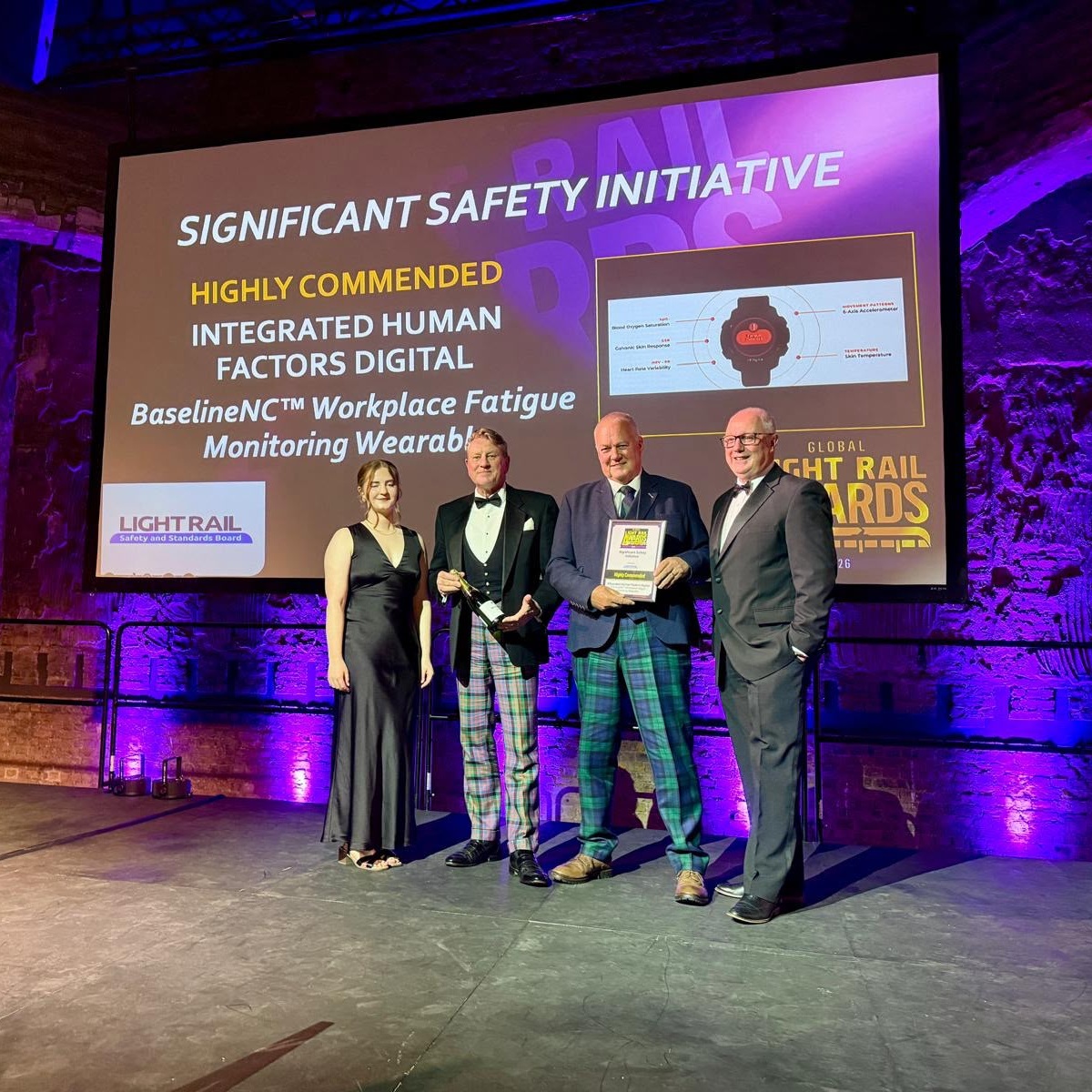
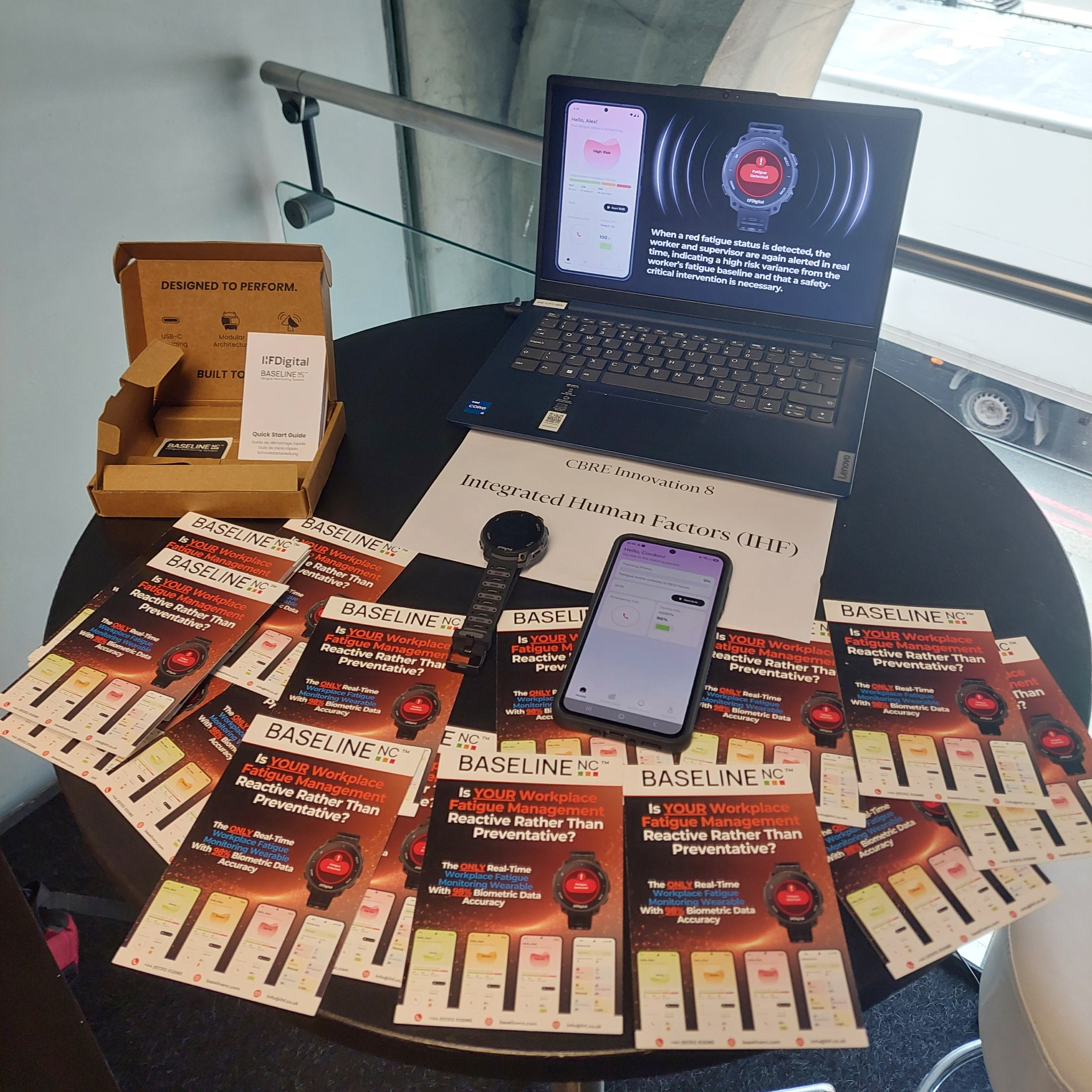
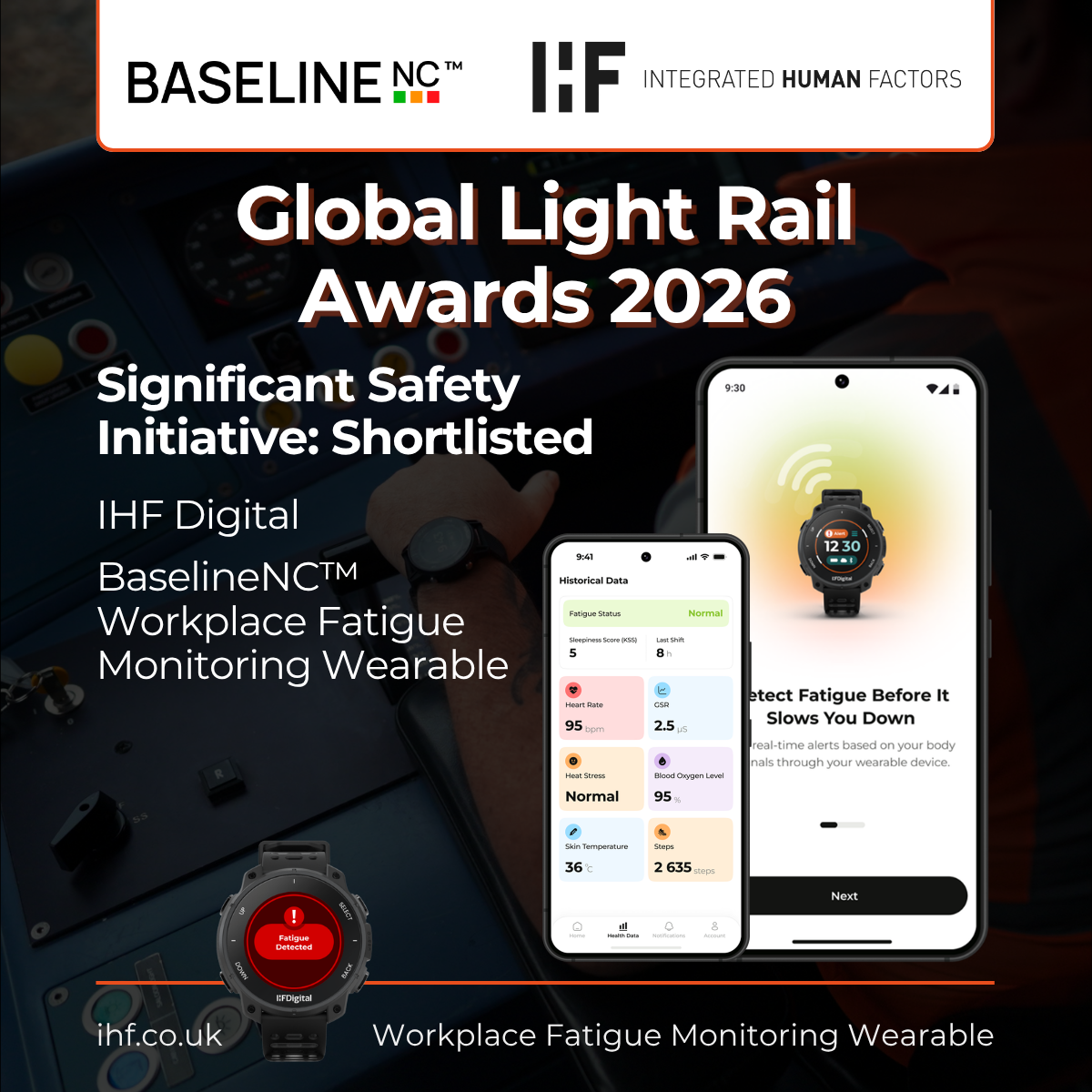
Additionally, IHF was selected over 113 organisations to deliver the initial DISC contract and BaselineNC was shortlisted as part of the CBRE Innovation Challenge 2026 — as a straight finalist from 290 submissions — based on its client value, ROI potential, market differentiation and ease of implementation.
Watch: A recording of this webinar can be found at the IHF YouTube channel.
Connect with Colin Kerr, MIET, iNARTE and Neil Clark, C.ErgHF, FCIEHF, MPhil on LinkedIn.
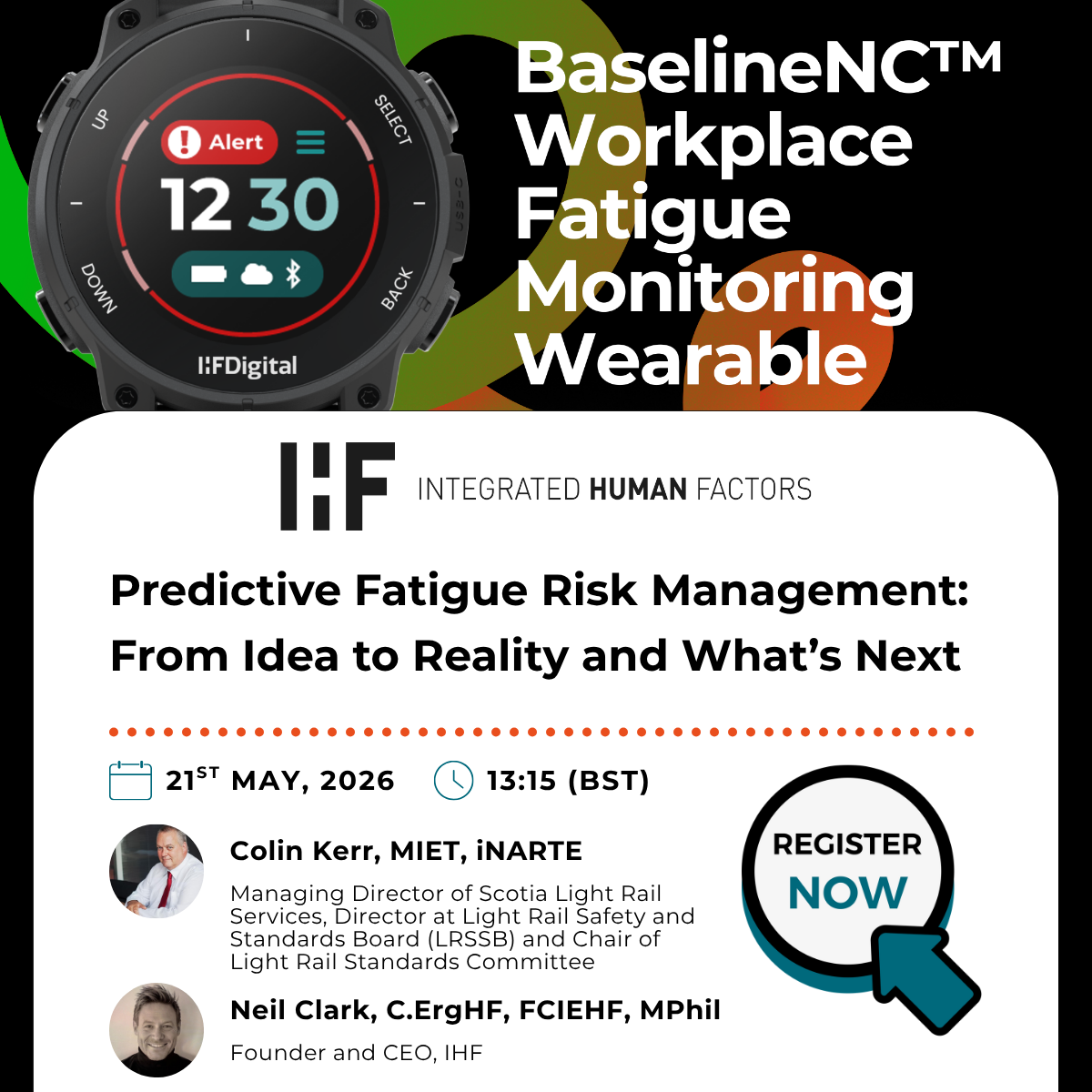
Predictive Fatigue Risk Management: From Idea to Reality and What’s Next Webinar Chapters
This webinar explores predictive fatigue risk management, the limitations of traditional fatigue monitoring approaches and the development of BaselineNC, a wearable technology solution designed to proactively identify fatigue risks to mitigate accidents and incidents, and provide wider business benefits (for example, relating to absenteeism, performance, productivity and presenteeism). The session covers the origins of the technology, real-world case studies, fatigue-related incidents, implementation strategies, business benefits and future applications.
Introduction and Webinar Overview
Watch Chapter: An introduction to predictive fatigue risk management, the webinar agenda and an overview of BaselineNC™ as a workplace fatigue monitoring and risk management solution.
Predictive Fatigue Risk Management
Watch Chapter: Learn why predictive fatigue risk management is becoming increasingly important and how organisations can move beyond traditional approaches to fatigue monitoring.
Problems With Traditional Fatigue Monitoring
Watch Chapter: Explore the limitations of traditional fatigue risk management methods such as fatigue surveys and self-reporting systems that often rely on subjective self-assessment and historical information rather than real-time data.
Limitations of Cameras and EEG Systems
Watch Chapter: Understand the challenges associated with camera-based fatigue monitoring and electroencephalogram (EEG) technologies, including privacy concerns, usability limitations and operational constraints.
Why BaselineNC™ Uses Wearable Technology
Watch Chapter: Discover why wearable technology was selected as the foundation for BaselineNC™ and how passive biometric monitoring enables proactive fatigue prediction and intervention.
Why Edinburgh Trams Undertook This Project
Watch Chapter: Learn why Edinburgh Trams initiated the project and how industry concerns around fatigue and driver wellbeing created the need for innovative solutions.
2016 Croydon Tram Derailment
Watch Chapter: Review the 2016 Croydon tram derailment and understand how loss of awareness contributed to one of the UK’s most significant tram accidents.
Industry Response and Search for Solutions
Watch Chapter: Understand how the lessons learned from the 2016 Croydon tram derailment informed the light rail industry’s response to fatigue-related accidents and incidents, and the search for technologies capable of reliably detecting driver attention and fatigue risks.
Driver Innovation Safety Challenge (DISC)
Watch Chapter: Learn how DISC was created and how it became the catalyst for developing a wearable fatigue and well-being monitoring solution.
Evolution From DISC to FOCUS+
Watch Chapter: Discover how the project evolved from DISC into FOCUS+, bringing together academia, medical experts and funding partners with industry to advance the wearable predictive fatigue monitoring technology.
Independent Testing: 98% Data Accuracy
Watch Chapter: Review the independent validation process that demonstrated the system could detect fatigue events with a reported 98% reliability.
Initial Trials and EIT Urban Mobility Project
Watch Chapter: Learn about the initial commercial trials and the EIT Urban Mobility project that helped expand the technology usage in bus and trolleybus vehicles — as well as trams — in Continental Europe (DKV in Debrecen, Hungary).
Spare Shift Driver Fatigue Findings
Watch Chapter: Discover how fatigue trends were identified among spare-shift tram drivers and how operational changes were implemented to reduce fatigue risk.
Evolution to BaselineNC™
Watch Chapter: Learn how the project transitioned into the commercial BaselineNC™ solution and the importance of workforce acceptance and non-punitive implementation.
Recent Fatigue-Related Accidents and Incidents
Watch Chapter: Review recent rail and transport incidents linked to fatigue, microsleep, medical events and loss of consciousness across multiple continents and countries.
Humanising/Operationalising BaselineNC™
Watch Chapter: Understand how organisations humanise/operationalise BaselineNC through pilot programmes, workforce engagement and practical fatigue risk management processes.
Beyond Tram Drivers: Other Use Cases
Watch Chapter: Explore how BaselineNC can be applied to lone workers, control room operators, aviation personnel, maintainers and other safety-critical roles.
Return on Investment (ROI) of Predictive Fatigue Risk Management
Watch Chapter: Discover the financial impact of fatigue and how organisations can realise significant returns through reduced absenteeism, presenteeism and productivity losses.
Biometrics and Medical-Grade Sensors Overview
Watch Chapter: Learn about the biometric data captured by BaselineNC, including blood oxygen saturation, galvanic skin response, heart rate variability (RR), movement patterns using a 6-axis accelerometer and skin temperature.
Please Note: BaselineNC is not a medical device and does not diagnose, treat, cure, prevent, monitor or alleviate any disease, injury, disability, medical condition or physiological disorder. It does not provide medical advice or determine medical fitness for work.
Mobile Application, Hubs and User Experience
Watch Chapter: Explore the BaselineNC mobile application, enterprise hubs and user interfaces that support fatigue monitoring, emergency response and user engagement.
Training the Algorithm to Achieve Personalised Fatigue Baselines
Watch Chapter: Understand how BaselineNC uses an initial training period to build personalised fatigue baselines and maintain predictive accuracy.
Supervisor Dashboards and Enterprise Analytics
Watch Chapter: Learn how supervisors and control rooms use real-time dashboards, alerts and analytics to monitor fatigue risks across operations.
Using BaselineNC™ Data to Improve Worker Shift Design
Watch Chapter: Discover how fatigue data can be used to optimise shift patterns, staffing models and workforce planning decisions.
Real Fatigue Event Reduction Trend Using BaselineNC™
Watch Chapter: Review operational data demonstrating how improved fatigue awareness and management can reduce fatigue events over time. Enabling enterprise-wide fatigue risk management.
Further Enabling the Human Sensor and Predictive Maintenance for Human Performance
Watch Chapter: Explore how BaselineNC further enables the “human sensor” and allows for a “predictive maintenance” approach — that is often utilised in asset performance management (APM) — in relation to the pre-emptive detection of the onset of worker fatigue.
AVEVA™ Operations Solutions and BaselineNC™
Watch Chapter: Learn how BaselineNC adds value to AVEVA™ Operations Solutions to combine human performance data with wider operational intelligence (for example, in line with equipment and machinery data).
BaselineNC™ Data Management and Infrastructure
Watch Chapter: Understand the security, anonymisation and infrastructure controls that protect sensitive biometric and operational data.
90-Day Straightforward Pilot Testing Process
Watch Chapter: Learn how organisations can evaluate BaselineNC through a structured 90-day pilot programme that demonstrates operational value and user acceptance.
There’s No Longer an Excuse To Ignore the Signs
Watch Chapter: A summary of the fatigue challenge facing organisations and why data-driven wearable technology offers a more effective approach to fatigue risk management.
Q&A: Ethical Issues, Privacy and Compulsory Usage
Watch Chapter: Discussion of data privacy, ethical considerations, special category data handling and workforce acceptance of fatigue monitoring technologies.
Q&A: Measuring Fatigue in the Workplace
Watch Chapter: Learn how fatigue can be measured using performance-based indicators, machine learning models and ongoing validation processes.
Q&A: Insurance Premium Reductions and Risk Benefits
Watch Chapter: Explore how predictive fatigue risk management may contribute to reduced insurance premiums and improved organisational risk profiles.
Human Factors Maturity Assessment (Haitch-F™)
Watch Chapter: Learn about the Haitch-F Human Factors Maturity Assessment and how organisations can benchmark and improve their human factors capability.
Predictive Fatigue Risk Management: From Idea to Reality and What’s Next Webinar References
ORR (2023) TfL fined £10m and TOL fined £4m for Croydon tram crash failings. Available at: https://www.orr.gov.uk/search-news/tfl-and-tol-fined-for-croydon-tram-crash-failings (Accessed: 19 May 2026).
RAIB (2017) Report 18/2017: Overturning of a tram at Sandilands junction, Croydon. Available at: https://www.gov.uk/raib-reports/overturning-of-a-tram-at-sandilands-junction-croydon (Accessed: 19 May 2026).
RAIB (2025) Report 09/2025: Buffer stop collision at London Bridge station. Available at: https://www.gov.uk/raib-reports/report-09-slash-2025-buffer-stop-collision-at-london-bridge-station (Accessed: 19 May 2026).
Safety Investigation Authority (2024) R2024-02 Collision on tram line 15 in Espoo on 15 November 2024 and other accidents and incidents on the same tram line in 2023-2025. Available at: https://www.turvallisuustutkinta.fi/en/investigations/investigation-reports/r2024-02-collision-of-trams-on-light-rail-line-15-in-helsinki-on-15-october-2024-and-collision-of-tram-with-end-wall-in-espoo-on-15-november-2024/ (Accessed: 19 May 2026)