It is important to note that neither the Commercial Vehicle Safety Alliance (CVSA) nor NAFMP endorses or recommends any specific product or service. The claims and system specifications of vendors have not been validated by CVSA or NAFMP.
Watch: A recording of this webinar can be found at the NAFMP website.
Presentation Slides: Can also be found at the NAFMP website.
Connect with Neil Clark and Rodolfo Giacoman on LinkedIn.
NAFMP Overview: Aims to prevent fatigue-related risks and costs by implementing a fatigue risk management system (FRMS) and cultivating a corporate safety culture that values an alert and productive workforce. The NAFMP provides drivers with the necessary knowledge to maintain a state of alertness that includes sleep hygiene, nutrition, exercise, mindfulness and warm relationships and the necessary skills to apply that knowledge while on duty including recognising objective signs of fatigue. The NAFMP recommends that FRMSs include sound scheduling practices, a sleep disorder management program and fatigue detection technologies.
CVSA Overview: A nonprofit organization composed of local, state, provincial, territorial and federal commercial motor vehicle safety officials and industry representatives. The Alliance aims to prevent commercial motor vehicle crashes, injuries and fatalities and believes that collaboration between government and industry improves road safety and saves lives. Their mission is to improve commercial motor vehicle safety and enforcement by providing guidance, education and advocacy for enforcement and industry across North America.
North American Fatigue Management Program (NAFMP) Solutions Series: BaselineNC™ Webinar Chapters
Welcome and Speaker Introductions (00:00:00)
Terry Moore introduces featured speaker Neil Clark from IHF Digital and host Rodolfo Giacoman from CVSA. Rodolfo provides a brief overview of how technology fits into the North American Fatigue Management Program (NAFMP).
Defining Predictive Fatigue Risk Management (00:06:45)
Neil Clark discusses the limitations of traditional fatigue monitoring, such as subjective surveys and reactive camera-based systems.
BaselineNC Overview and Origin (00:10:07)
Neil Clark explains how the 2016 Croydon tram derailment inspired the creation of the BaselineNC system. He outlines the goal of detecting fatigue biomarkers proactively to prevent accidents before they occur.
Medical-Grade Sensors and Biometrics (00:14:18)
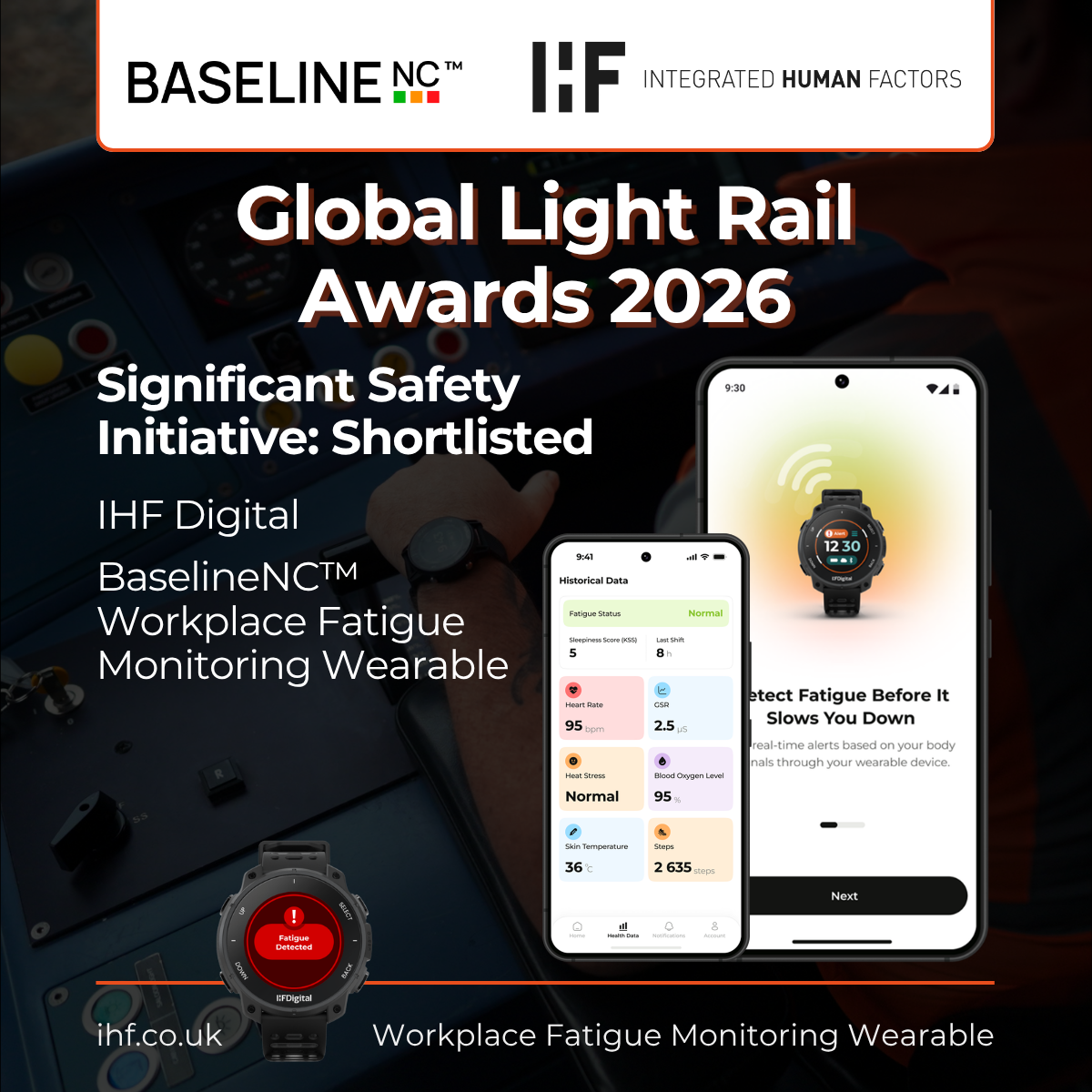
An explanation of the medical-grade sensors used in the wearable device. The system measures blood oxygen saturation, galvanic skin response, heart rate variability (RR), movement patterns using a 6-axis accelerometer and skin temperature.
Please Note: BaselineNC is not a medical device and does not diagnose, treat, cure, prevent, monitor or alleviate any disease, injury, disability, medical condition or physiological disorder. It does not provide medical advice or determine medical fitness for work.
Algorithm Development and Independent Testing (00:16:32)
Neil Clark shares how the technology was independently tested in a UK tram simulator. The BaselineNC system successfully detected inattention hours before drivers self-assessed as fatigued, even predicting micro-sleeps.
Key Differentiators and Union Engagement (00:22:36)
A look at how BaselineNC differs from traditional methods and camera systems. Neil Clark highlights the importance of open, authentic conversations to gain support from industrial relations and labour unions.
The App, Hub and Control Room Dashboard (00:29:56)
An overview of the system’s user interface, detailing the mobile app, safe driver modes, and the screenless “hub” device. Neil Clark also demonstrates the control room dashboard, which gives supervisors an at-a-glance view of driver fatigue statuses (red, amber, green).
Three Easy Steps to Implementation (00:34:51)
The onboarding process for organisations is broken down into an introductory session, an up to two-week period where the algorithm trains on the user’s individual baseline and finally going live.
Q&A Session (00:37:26)
Rodolfo Giacoman leads a Q&A session covering topics such as whether the device needs to be worn to bed, average battery life, the protocol for supervisors when a driver hits a “red” alert, data ownership and the role of safety culture in a successful rollout.