IHF Training Courses
Date TBC (Abu Dhabi, UAE): Understanding and Applying Human Factors and Ergonomics (HF/E) in Major Projects
IHF is planning to host a one-day training course in Abu Dhabi, UAE.
This IHF training course addresses cross-industry HF/E considerations across the project life cycle, with key learning outcomes including the following:
- Understand the concept of HF/E and what it means in practice.
- Why and when HF/E should be applied in the project life cycle and how it should be integrated.
- Critical HF/E activities and artefacts required during the project life cycle.
The operational and commercial benefits of competently applying HF/E at the appropriate stages of projects.
This one-day training course in Abu Dhabi, UAE is open to individuals and groups from organisations at $990 (USD) per person.
Register Interest: To register your interest for this training course, please contact IHF.
IHF Webinars
28th May, 2026: Human Factors Integration in UI and UX Design for Digital Systems
Inadequately designed User Interfaces (UI) and User Experiences (UX) create hidden risks in safety-critical and high-reliability industries. When systems are not intuitive, consistent or designed around human cognitive and physical capabilities, organisations face increased human error, safety risks, operational inefficiencies, technostress, low staff satisfaction, higher turnover, technology adoption struggles and rising training costs. There are regulatory compliance, standards and guidance factors such as BS EN ISO 11064, IEC 62366-1:2015, IEC 62682:2022 and ISO 9241-210:2019 that focus on UI and UX considerations such as ergonomic human-centred design, human-machine interface (HMI) and management of alarm systems.
In this webinar, Dr. Chizaram Nwankwo, C.ErgHF and Jessica Bailey — Senior Human Factors Consultants at Integrated Human Factors (IHF) — will provide an overview of human factors integration in UI and UX Design for digital systems and how IHF — a registered consultancy with the Chartered Institute of Ergonomics and Human Factors (CIEHF) — can help an organisation achieve enterprise-wide, integrated and proactive ergonomic risk management. can help an organisation ensure technology solutions are intuitive, error-resilient and compliant with regulatory compliance, standards and guidance factors.
24th June, 2026: An Introduction to Incident Investigation
In safety-critical industrial operations, accident and incident investigations managed using paper, spreadsheets and word documents can lead to problems such as auditability, control, incompleteness and reportability to regulators. This grows in complexity when organisations operate multiple sites without consistent and repeatable processes, intelligent trending and visibility of accidents/incidents. According to the COMAH Competent Authority, learning from incidents and accidents is important to ensure organisations prevent future similar incidents. After an accident/incident involving human failure, the investigation into the causes and contributing factors often makes little attempt to understand why the human failures occurred. Determining both the immediate and the underlying cause of an accident/incident is the key to preventing similar occurrences through the design of effective control measures and organisational learning.
In this webinar, Aidan Henderson, MSc — Senior Human Factors Consultant at Integrated Human Factors (IHF) — will provide an overview of incident investigation and how IHF — a registered consultancy with the Chartered Institute of Ergonomics and Human Factors (CIEHF) — can help an organisation facilitate the integration of human factors into incident investigation — and as a result — identify and learn from trends, leading to proactive steps and targeted investment to reduce costs and mitigate accidents.
Registration: To register for this live webinar, please click here.
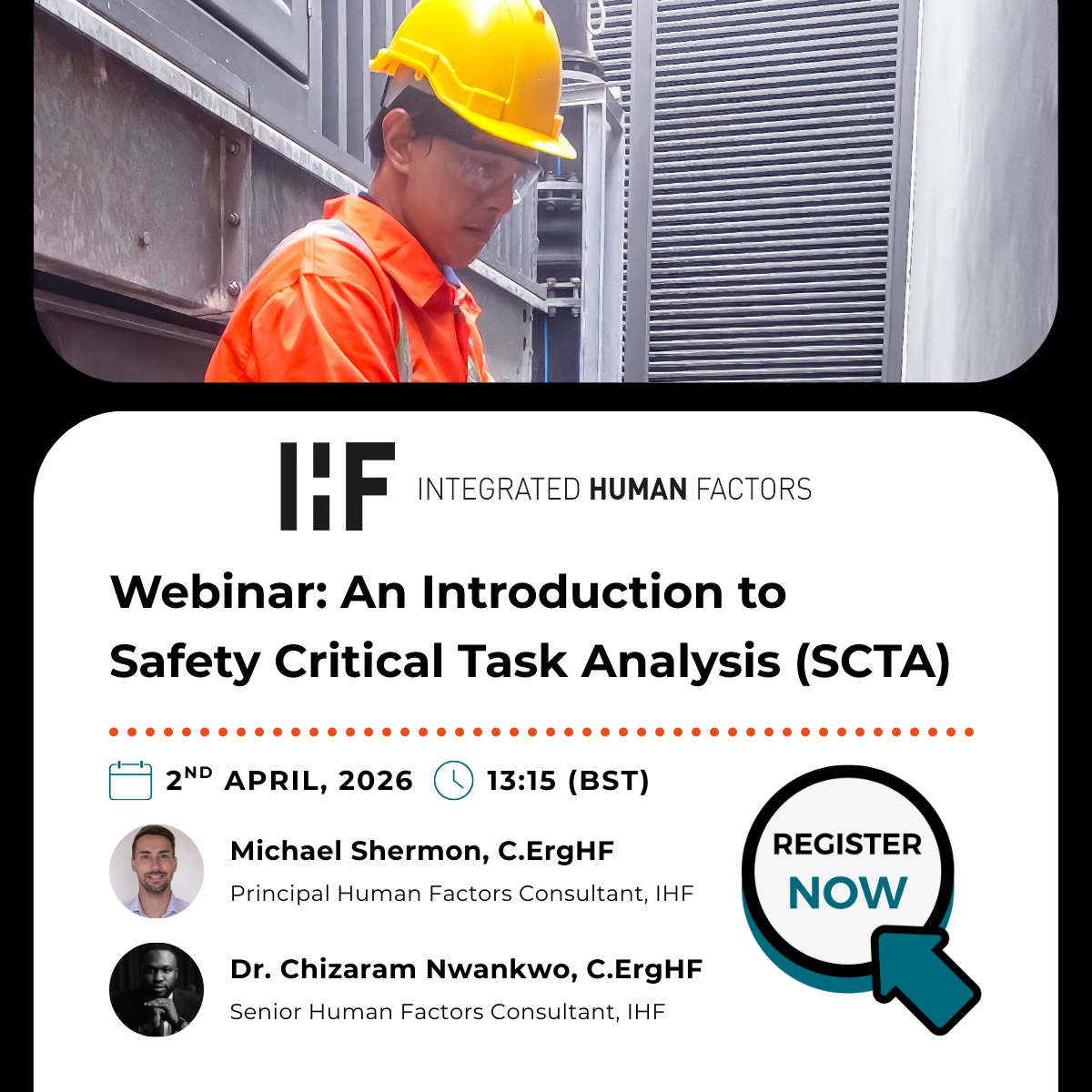
8th October, 2026: End-to-End Walkthrough of the SCTA Process
In safety-critical industrial operations, dangerous tasks that rely on people to undertake them have been a contributory factor in many accidents, incidents and near misses. According to the COMAH Competent Authority, operators should use risk assessment and findings from accident and incident investigations to gain a clear understanding of where and when they are vulnerable to human failure (COMAH-critical tasks), how those failures are likely to occur — accounting for the different types of human error — and the Performance Influencing Factors (PIFs) that make those human errors more likely. The fundamental purpose of Safety Critical Task Analysis (SCTA) is to identify areas in a task that are susceptible to human failure and could result in a major accident, as well as strengthening the controls in place to mitigate the risks.
In this webinar, Michael Shermon, C.ErgHF and Dr. Chizaram Nwankwo, C.ErgHF — human factors consultants at IHF — will provide an overview of the SCTA process that IHF follows and advocates. Underlying this approach is a belief in keeping the process as straightforward and impactful as possible. IHF regularly support clients throughout the SCTA process from the screening process, to the walk through and to the PIFs walk through in line with Chartered Institute of Ergonomics and Human Factors (CIEHF), Energy Institute (EI), Health and Safety Executive (HSE), Human Performance Oil & Gas (HPOG) and International Association of Oil & Gas Producers (IOGP) guidelines:
Gather All Screening Inputs
Screen Inputs to Create a Task Register
Prioritise Tasks
Build the Hierarchical Task Analysis (HTA)
Conduct the Human Error Analysis (HEA)
Evaluate and Implement Actions Arising
Registration: To register for this live webinar, please click here.
Future Events
22nd to 25th September, 2026 (Berlin, Germany): InnoTrans 2026
InnoTrans is the leading international trade fair for transport technology.
Registration: For further information and how to register, please visit the InnoTrans website.
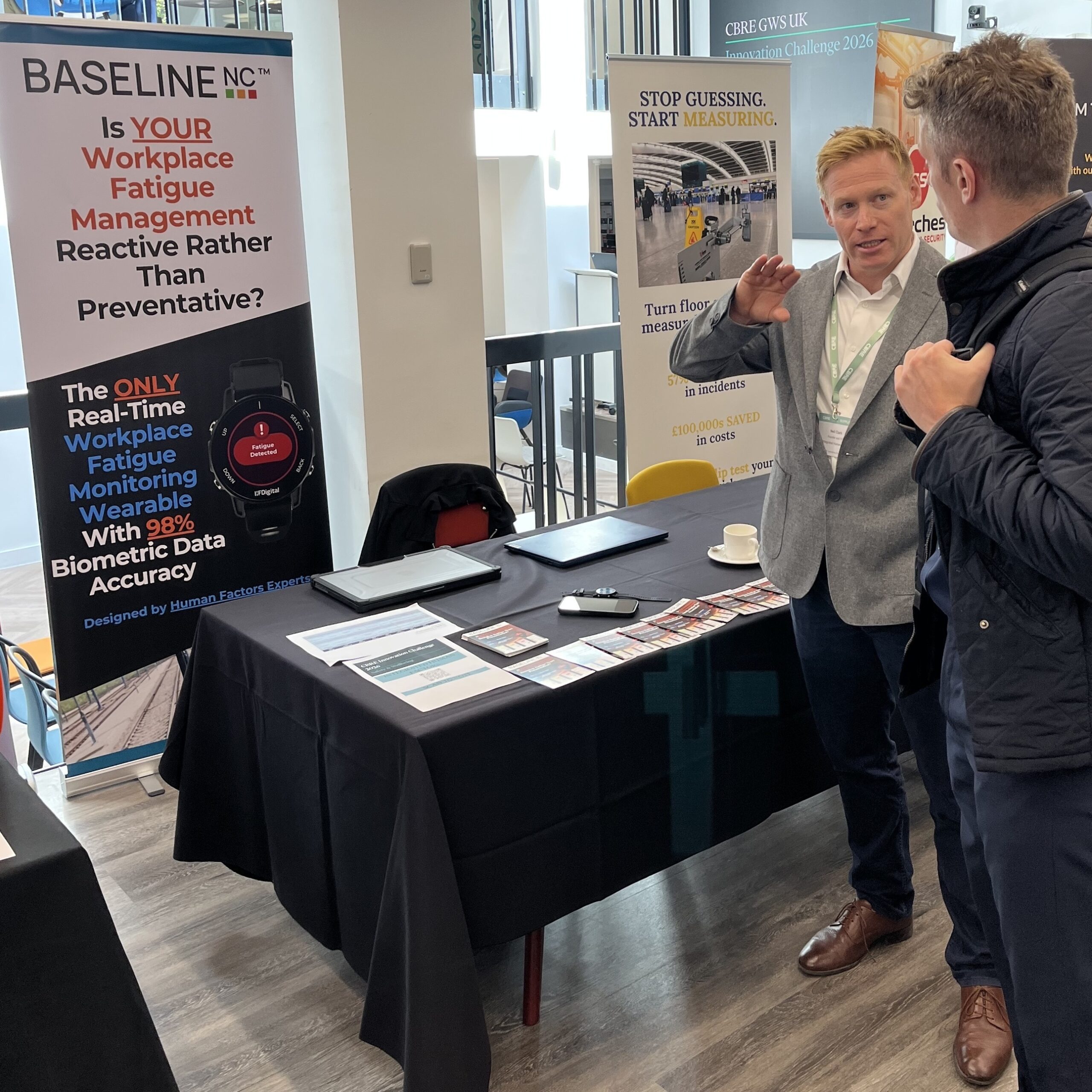
24th September, 2026 (London, England): CBRE Supplier Partner Event 2026
This year’s CBRE Supplier Partner Event is a powerful testament to their commitment to cultivating long-term partnerships. CBRE believe in the Power of Partnerships, recognising that by collaborating with their partners, they can collectively drive innovation, achieve excellence and champion sustainability within the UK facilities management industry.
Registration: For further information and how to register, please visit the CBRE website.
17th to 19th November, 2026 (Manchester, England): Hazards 36 Process Safety Conference 2026
Hazards is one of the world’s leading process safety conferences, with a history dating back to 1960. The conference brings together industry practitioners to share good practice, emerging thinking and lessons learned in process safety, while providing a forum for informed technical discussion and professional networking. Hazards offers process safety and loss prevention professionals a valuable opportunity to engage with peers, strengthen professional networks and renew their focus on robust, effective process safety practice.
Registration: For further information and how to register, please visit the iChemE website.