At the Bridgetown Special Summit on AI Safety held on 23 November 2026, the UN Secretary-General António Guterres called for Member States to develop, within a year, a globally inclusive, principles-based Multilateral Framework for managing AI risk, with independent and credible oversight. Mr. Guterres said:
“Let’s ensure that artificial intelligence is shaped by humanity, with humanity, and for all humanity.”
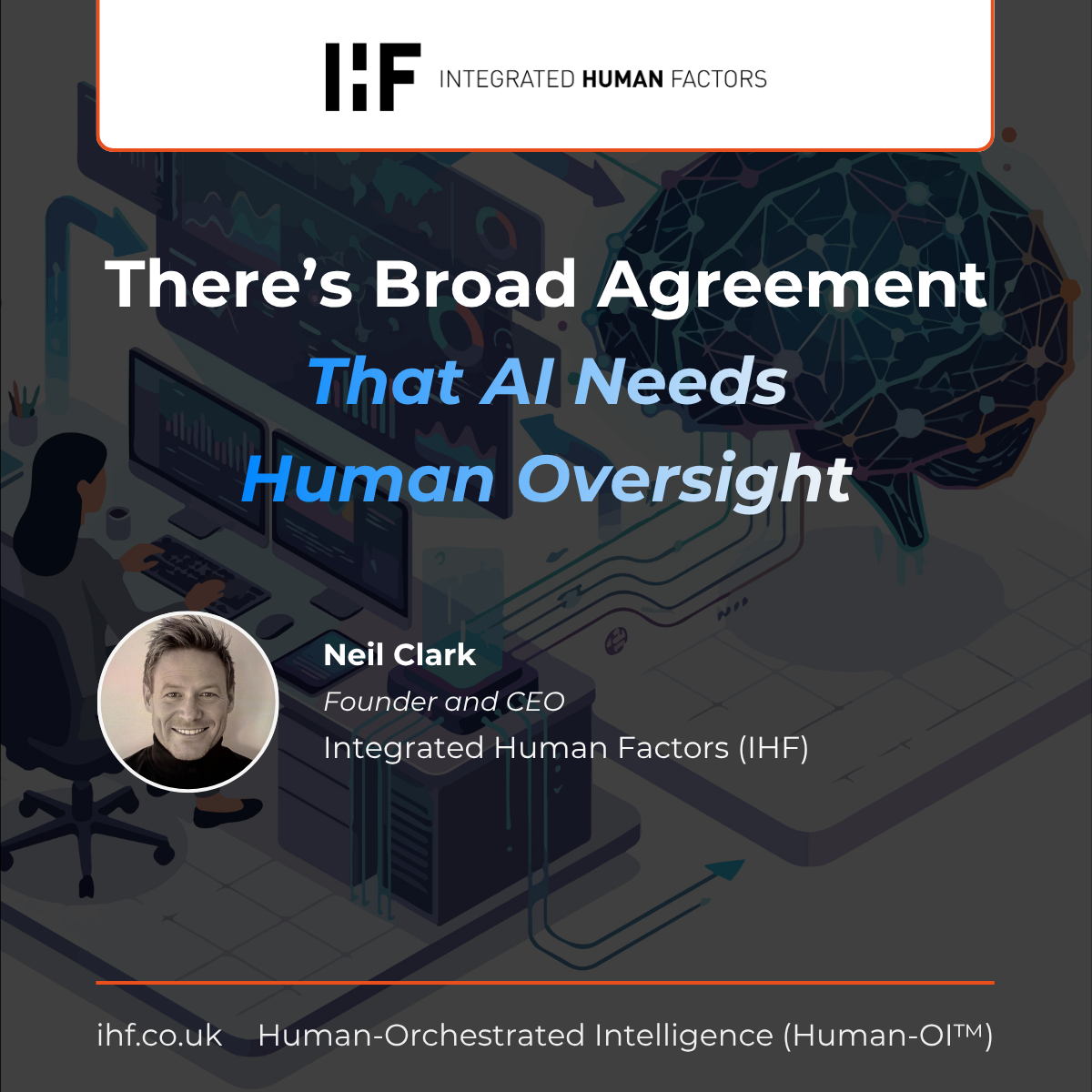
There is broad agreement that artificial intelligence (AI) needs human oversight. While much of the discussion around AI focuses on governance and oversight at an institutional level, far less attention is paid to what effective human oversight looks like for the person doing it.
Centiment, on behalf of Zapier, surveyed 518 US executives, all at companies with an existing AI governance policy and at least 100 employees. The findings, published in September 2026, showed that 45% require human approval only for high-stakes work or allow AI to operate without human review. Additionally, 38% say their organisation has already suffered negative consequences from using unsupervised AI (including costs in terms of time, money or reputation).
Limiting human oversight to high-stakes work sounds sensible. It depends on being able to reliably identify in advance which outputs could have significant consequences. It can also leave reviewers with too little practice. When a system is right most of the time, people can become less vigilant, miss errors and lose their feel for how good work looks. Then we rely on them to catch the one that counts.
A policy can set where a human should check. Human Factors Engineering (HFE) addresses whether that human can: the information in front of them, the time they have, the authority to stop the work and the competence to know when something is wrong. Without those, a governance policy risks remaining just a document.
That is the gap Human-Orchestrated Intelligence (Human-OI™) is designed to close. It defines where human checks belong in an AI-enabled workflow, tests whether people can perform them and builds the competence behind them.
Connect with Neil on LinkedIn.
Further Reading
- Every Organisation Adopting AI Is Running an Experiment: Most Don’t Know What They’re Actually Risking
- IHF Webinar: Human Factors Integration in UI and UX Design for Digital Systems
- Realising the Benefits of AI: By Designing the Human Role Effectively
- Why Responsible AI Adoption Is a Human Factors Problem