Why does Human Performance matter? When major accident hazards (MAHs) are being managed, it is not enough to focus solely on equipment and systems. Regulators increasingly want to understand how organisations are managing the human contribution to safety too.
That is why “Managing Human Performance” is Topic 1 in the COMAH Competent Authority: Inspecting Human Factors at COMAH Establishments Delivery Guide and often provides the foundation for everything that follows.
Human Performance is about more than procedures. One of the biggest misconceptions IHF consultants encounter is that businesses often believe having a process in place automatically means the risk has been addressed.
In reality, regulators want to understand how critical tasks have been identified, assessed and improved. They want to see the evidence behind the intention.
What do regulators expect to see?
- A documented Safety Critical Task Analysis (SCTA) process.
- Competence management arrangements.
- A list of COMAH-critical tasks.
- Assessment reports.
- A schedule of ongoing assessments.
- Action tracking and evidence of implementation.
Unfortunately, some critical tasks are still being missed.
Many organisations do a good job assessing routine operational activities. Where challenges often arise is around maintenance, testing, calibration, abnormal operations and emergency response tasks. These activities can present significant opportunities for human error, yet they are sometimes overlooked during assessment.
A simple readiness check for COMAH Establishments:
- Have all COMAH-critical tasks been assessed?
- Have maintenance activities been considered?
- Have abnormal and emergency response tasks been included?
- Could you explain the actions arising from the assessments?
- Could more be done to reduce the likelihood of human error?
The reality is many organisations believe that they are managing Human Performance effectively until they are asked to demonstrate it.
Regulator readiness comes from having a clear process, evidence of implementation and a genuine understanding of where human error risk exists.
Start by asking yourself:
“Do we truly understand where human error could contribute to a major accident?”
Being regulator-ready is not about producing documents and satisfying an inspector.
It is about understanding where things can go wrong and reducing the chance of human error contributing to a major accident.
The organisation doing this well is not necessarily doing more work. They are focusing on the right work.
“Good Human Performance management is about understanding where people have the greatest opportunity to influence major accident risk and taking practical steps to make those tasks more reliable. The strongest organisations treat it as an ongoing process, not a compliance exercise.”
Michael Shermon, Principal Human Factors Consultant, Integrated Human Factors (IHF)
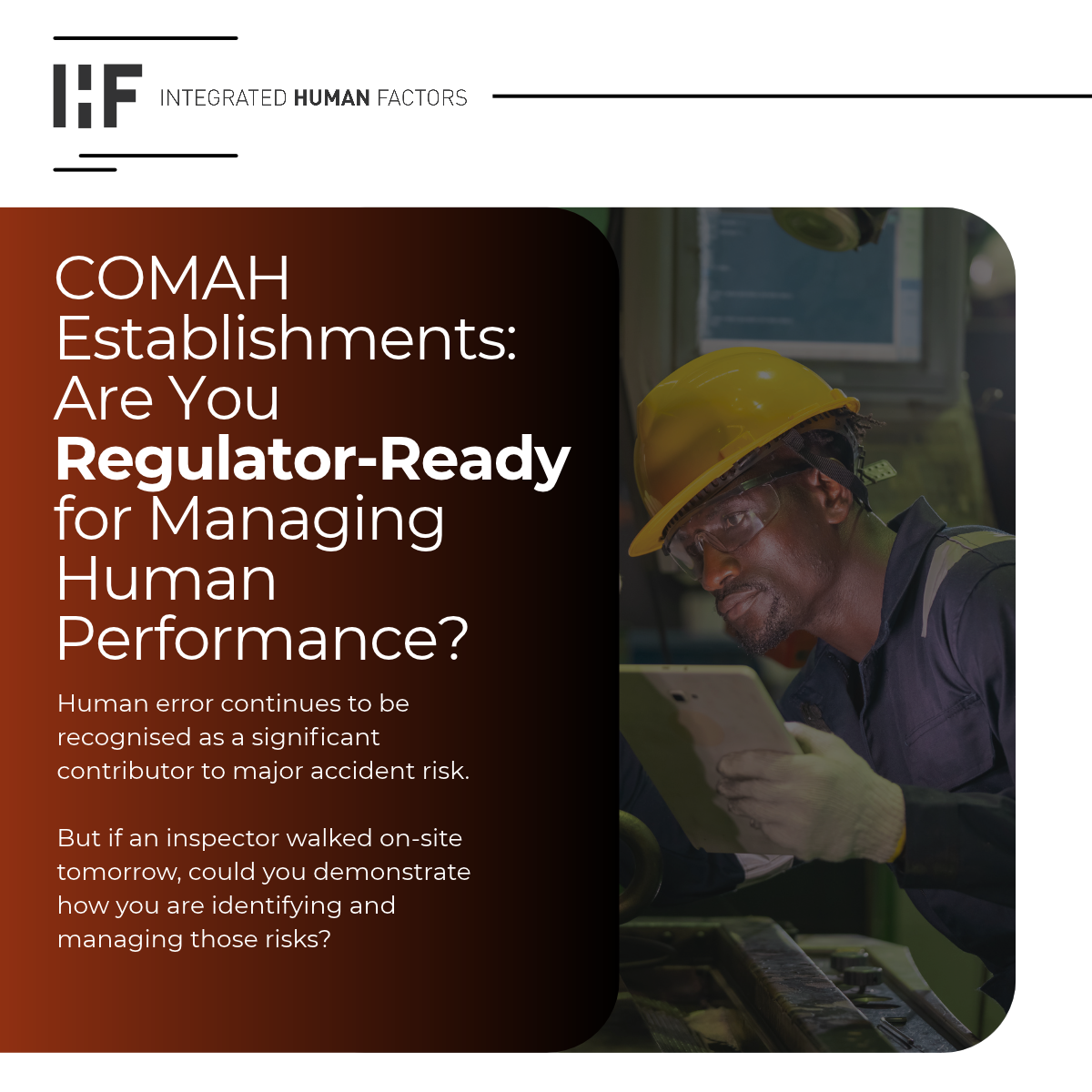
Further Reading: COMAH Establishments: Are You Regulator-Ready for Managing Human Performance?