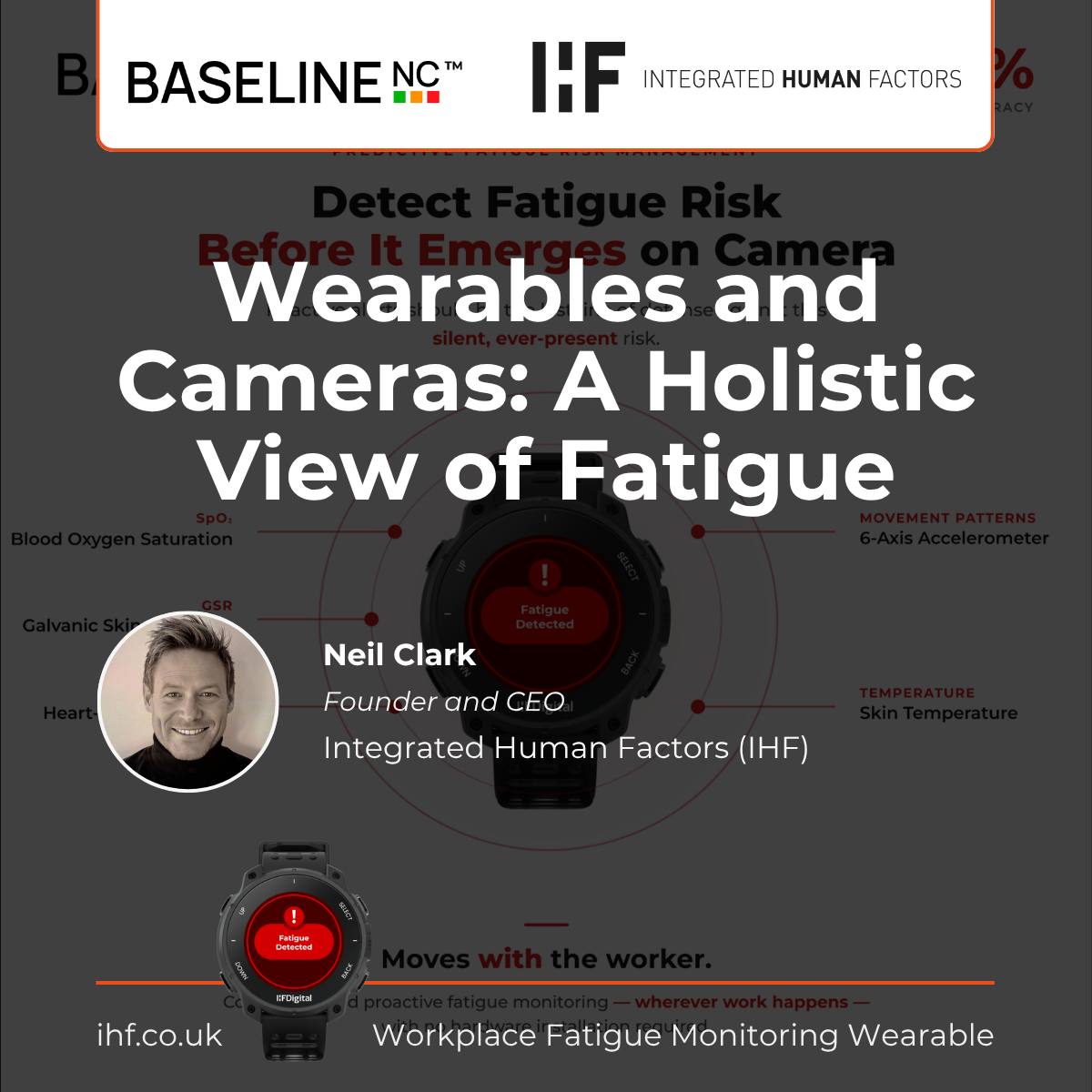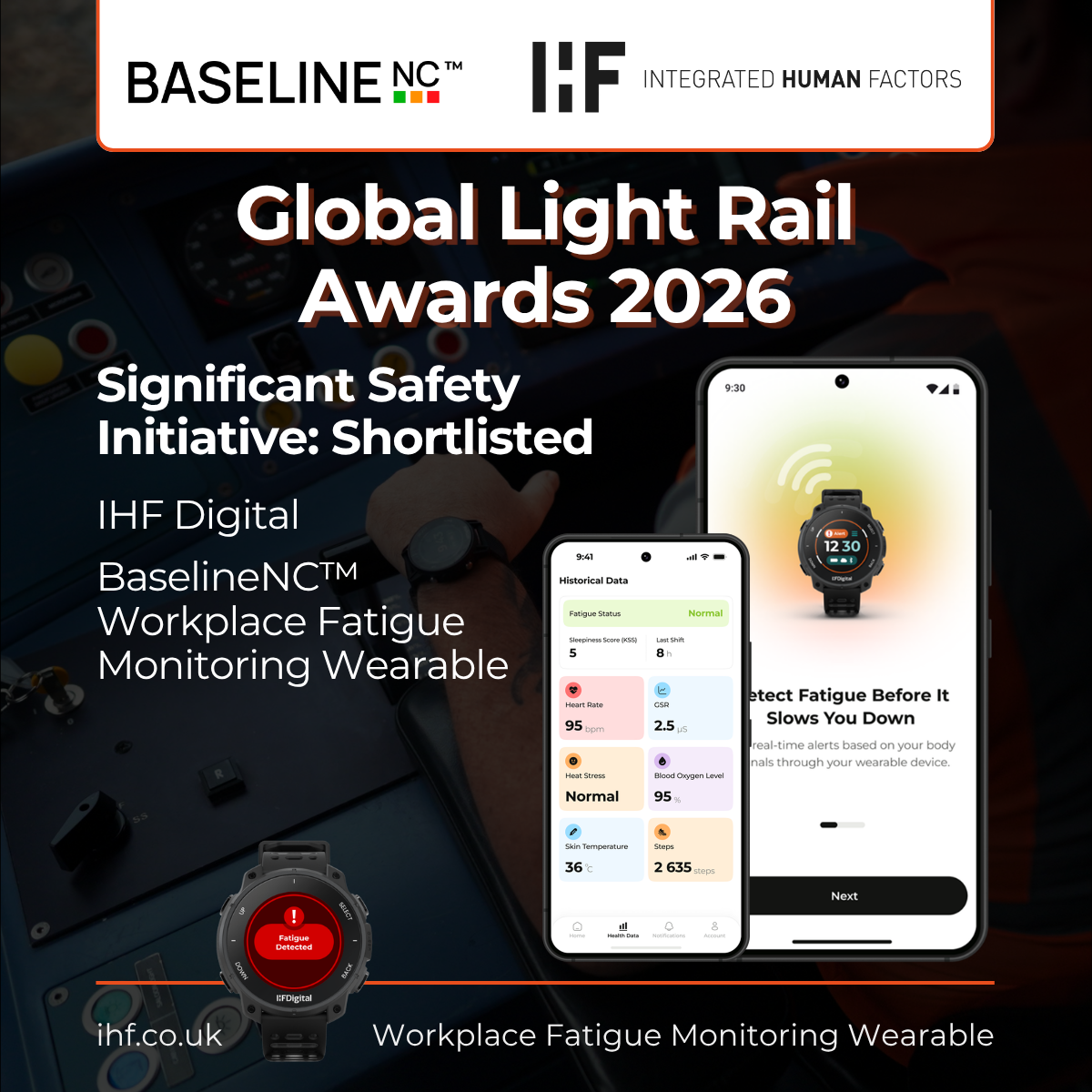
This is not about replacing camera-based technology. It is about giving organisations the strongest possible support. One of the questions asked about the BaselineNC Workplace Fatigue Monitoring Wearable is:
If we have already invested in camera technology for fatigue risk management, do we need to invest in BaselineNC?
There are examples where cameras fit quite well into the operating environment such as static environments where drivers or operators stare down the barrel of the camera. However, there are also some downsides in safety-critical operations. The cues and signals that cameras pick up on are often incredibly close to the moment of fatigue or inattention.
Reactive alerts should be the last line of defense against this silent, ever-present risk.
So, in these fixed and/or static environments such as cabs and workstations, there is a place for BaselineNC where it is providing live biometric data feeds that allow organisations to objectively trend, predict and proactively identify fatigue risk. Therefore, wearables can coexist with cameras that are focusing on worker behaviors more specifically.
BaselineNC moves with the worker and provides a physiological predictive protection barrier based on biometrics, whilst cameras provide a more reactive physical barrier based on behaviours.
Industrial workers often move around dynamically and are therefore not confined to static environments. As a result, because BaselineNC uses wearable technology it allows workers to go about their daily business without prolonged gaps in fatigue risk monitoring. This is far more proactive in protecting against fatigue risk and inattentive moments.
As a result, where cameras are used for monitoring, they are often focused more on worker behaviors and BaselineNC can fill fatigue risk management gaps. These gaps can appear when there is not a static environment or an opportunity for a camera to be staring at a worker or vice versa.
BaselineNC as an energy-efficient, lightweight, mobile and unobtrusive wearable device is far more suited to diverse operational environments and different job roles across a workforce.
Connect with Neil to discover how BaselineNC can add continuous, layered, portable and predictive fatigue risk protection across the workforce, even if there are existing camera systems in fixed environments.
Portable Wearables + Fixed Cameras = More Predictive, Less Reactive: Detect Fatigue Risk Before It Emerges on Camera
Further Reading: Workplace Fatigue Monitoring Wearable Technology Versus Eye Tracking Technology