Unfortunately, fatigue is a silent, ever-present risk across all sectors with human and financial costs.
Currently, many of the fatigue risk management tools and methods that are accepted and deployed within organisations rely on self-assessment and subjective questionnaire completion by workers.
We ask potentially fatigued individuals to self-assess on their fatigued state. There are many ironies with this, as we know that one of the things that fatigue negatively impacts is our decision making, judgement and our ability to self-assess. So, there is a huge inherent flaw in the traditional ways of self-assessing fatigue.
And so making the shift from subjective self-assessed, questionnaire-based methods to an objective biometric, predictive data-driven approach to fatigue is hugely important for a number of reasons.
For example, there is a cultural aspect as it takes quite a bit of courage from an individual — or an organisation — to put their hand up and say, “I am fatigued” and/or “you are fatigued” and there can be a stigma attached to self-reporting fatigue.
Additionally in safety-critical roles, it is important just from a data perspective. Organisations are often relying on sporadic observation and manual qualitative data entry and this is open to one-sided subjective intuition and self-assessment from workers — who may think they feel fine — without quantitative biometric insights into the physiological indicators of fatigue.
Therefore, fatigue can be seen as a solely frontline or operational issue. In other words, it is the issue of the individual who is fatigued. A predictive and objective data-driven approach can elevate the dangers of workplace fatigue and its related financial and productivity losses into an enterprise-wide priority, from frontline workers to the boardroom.
IHF have contributed an “Objective and Proactive Fatigue Risk Management” article to the 602nd issue of The Ergonomist magazine that was released in December 2025.
The Ergonomist is the Chartered Institute of Ergonomics and Human Factors (CIEHF)’s magazine that contains articles, columns, news, events and opinion from CIEHF members like IHF and from people who work in fields related to ergonomics and human factors.
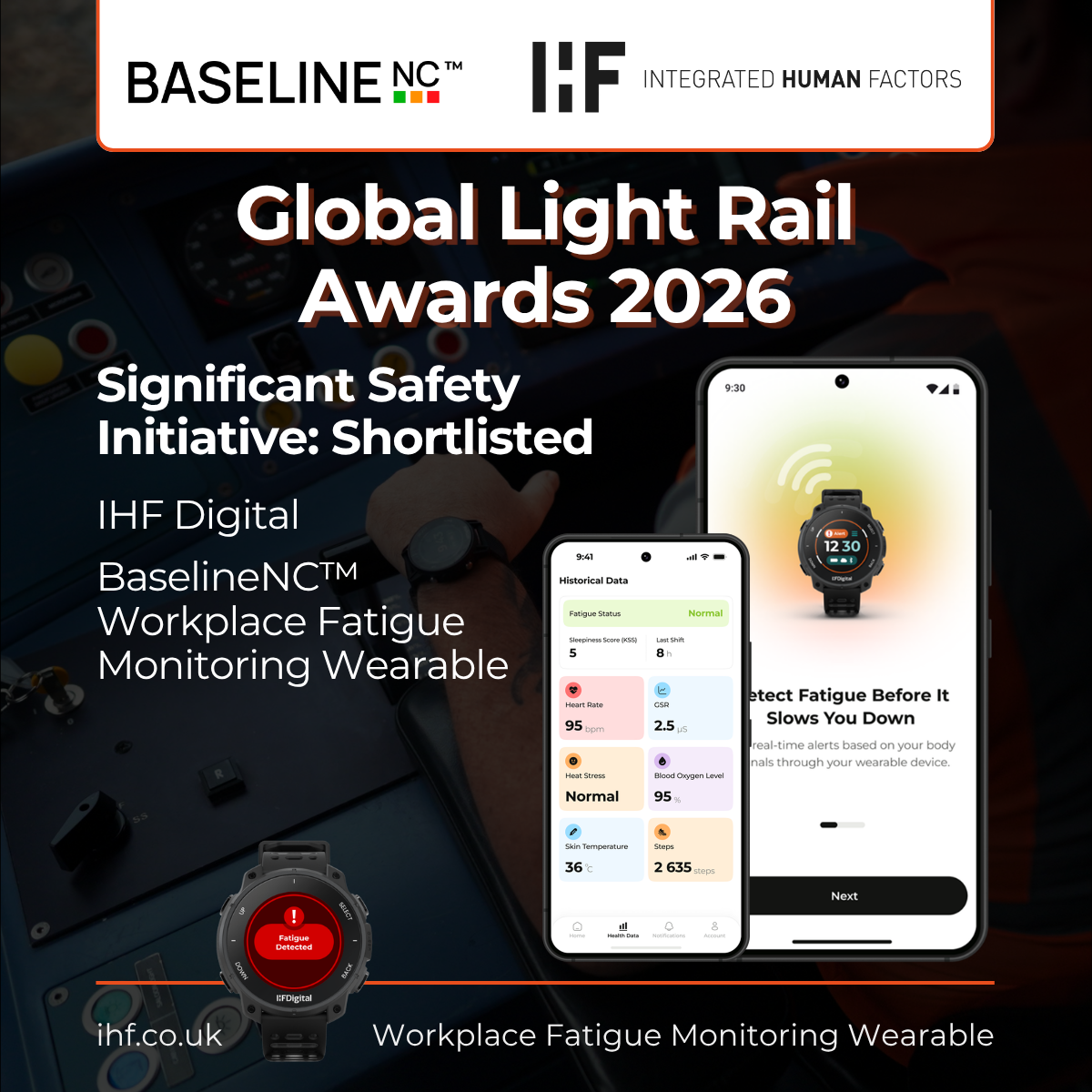
The “Objective and Proactive Fatigue Risk Management” article concludes that using a predictive data-driven approach — enabled by the BaselineNC™ Workplace Fatigue Monitoring Wearable — can help elevate the dangers of worker fatigue and heat stress into an enterprise-wide organisational priority, from frontline workers to the boardroom. This objective rather than subjective, and proactive rather than reactive, philosophy aims to prevent accidents and incidents and most importantly protect humans from harm.
Full Article: The Ergonomist December 2025 Article: Objective and Proactive Fatigue Risk Management
This article first appeared in the December 2025 issue of The Ergonomist, the magazine of the Chartered Institute of Ergonomics and Human Factors.
Connect with Neil on LinkedIn.
The BaselineNC workplace fatigue monitoring wearable project is also EIT Urban Mobility funded and was recently featured as part of the Impact Stories series: Wearable technology for human error prevention in transportation