October 27, 2025

Dr. Chizaram Nwankwo: Performance Influencing Factors (PIFs) in Safety Critical Task Analysis (SCTA)

Dr. Chizaram Nwankwo — a Senior Human Factors Consultant at IHF — explains the underlying Performance Influencing Factors (PIFs) that influence accident causation.

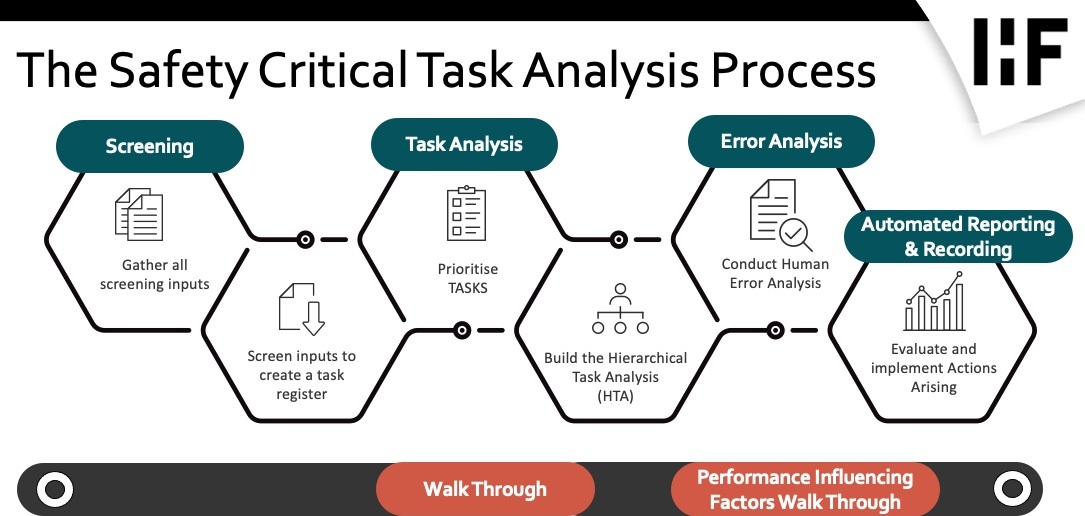
Safety Critical Task Analysis (SCTA) is one of the most practical tools we use to understand, anticipate and prevent human failures in high-risk environments.

In every organisation, whether offshore, in utilities or even in healthcare, people are at the heart of operations; and people, by nature, are fallible.

Human failures do not occur in isolation; they are shaped by Performance Influencing Factors (PIFs) such as:

  • The job (for example, complexity, workload and clarity of procedures).
  • The person (for example, competence, fatigue and situational awareness).
  • The organisation (for example, culture, supervision, communication and resources)

When these factors interact unfavourably, they can lead to slips, lapses, mistakes or violations; small errors that under the wrong circumstances can trigger serious incidents or even Major Accident Hazard (MAH) scenarios.

This is where SCTA comes in.

SCTA systematically examines the human contribution to critical tasks, identifying potential error points and assessing their consequences. By doing this, we can apply appropriate preventive and mitigative controls using the hierarchy of control; from engineering and procedural safeguards to training, supervision and verification measures tailored to the specific human failure type.

In essence, SCTA helps bridge the gap between what people are expected to do (work-as-imagined) and what actually happens in real work (work-as-done), ensuring that the systems we design are as resilient as the people who operate them.

If we can understand the human in the system, we can design safer systems for humans.

Connect with Dr. Nwankwo on LinkedIn.

Share This Article:
Facebook
Twitter
LinkedIn
WhatsApp

Latest IHF News and Updates