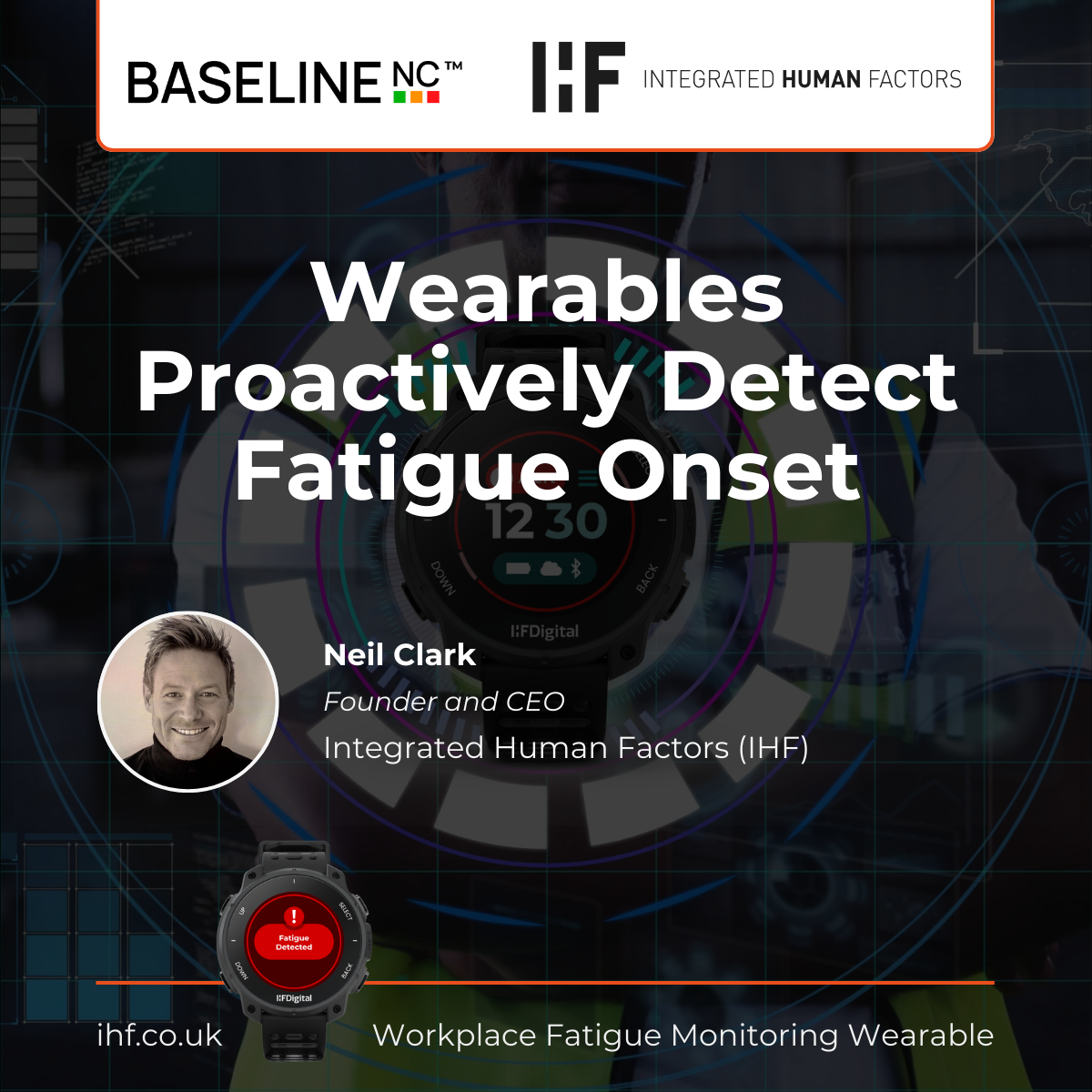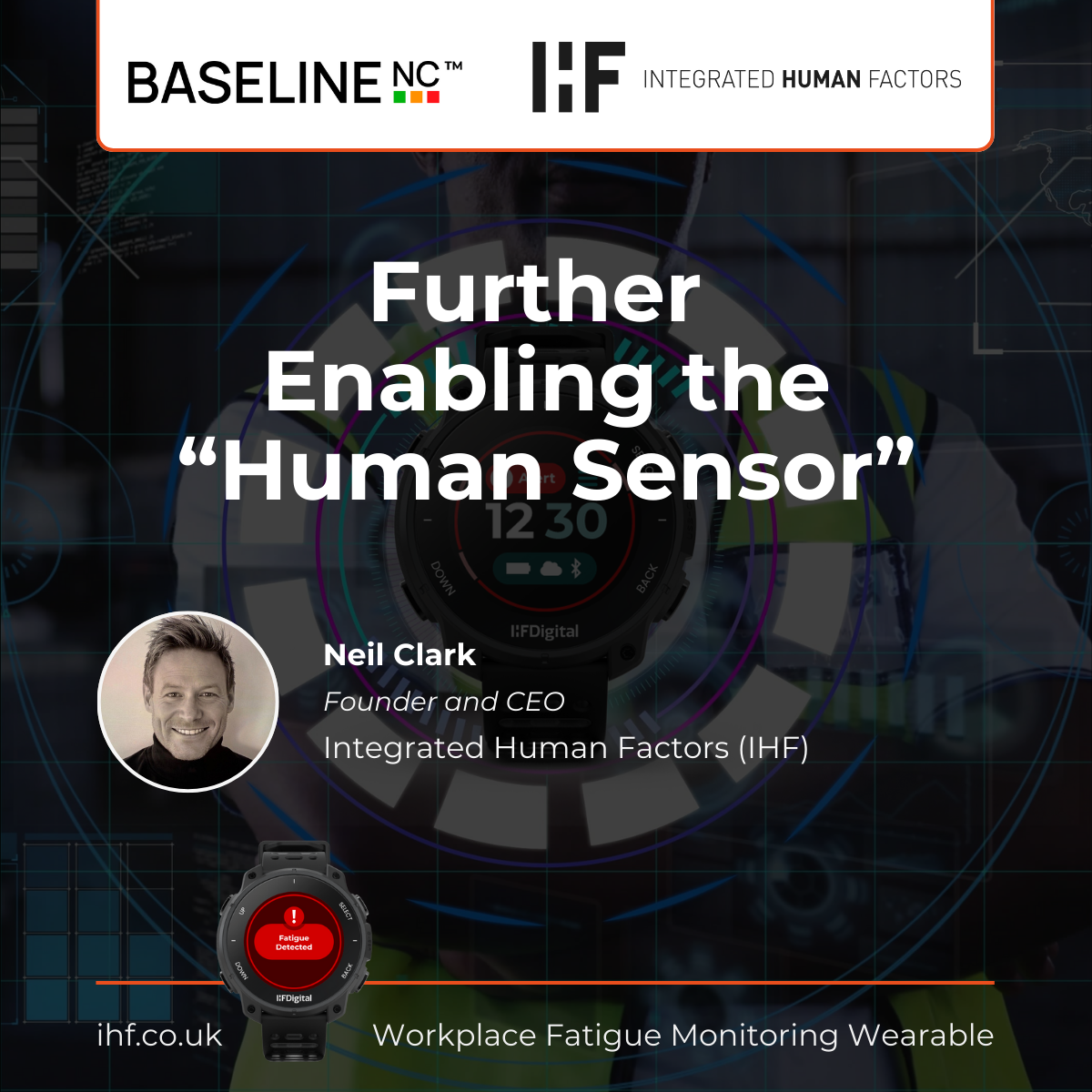
One of the ways we can measure fatigue is through eye tracking. This uses something called lid lag — that is the frequency and duration of your eyelids closing — to do sleep inferred fatigue assessment.
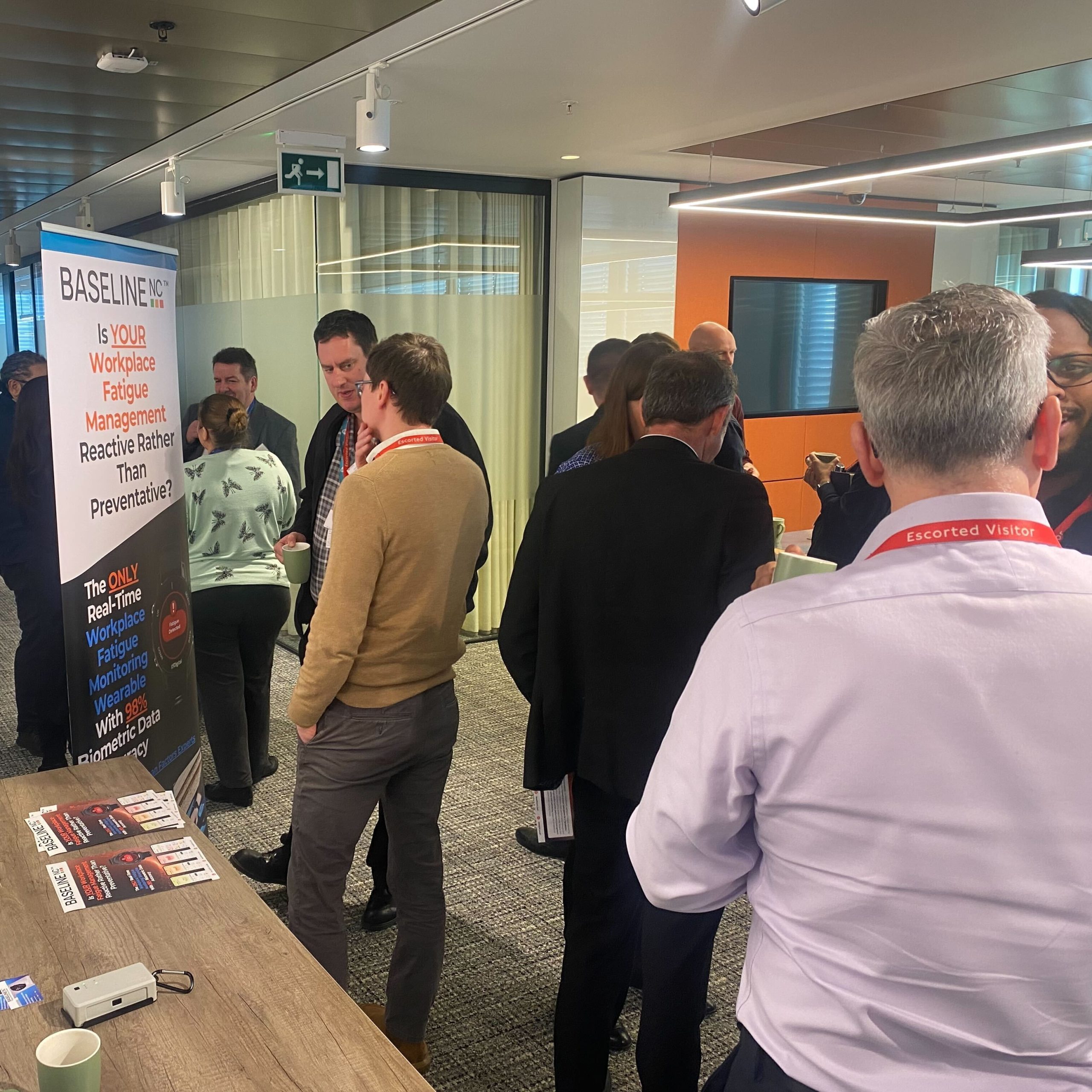
And that is a valid way of detecting and measuring fatigue. However, BaselineNC™ — an energy-efficient, lightweight, mobile and unobtrusive wrist-worn industrial internet of things (IIoT) device — takes things a step further.
The BaselineNC Advanced Fatigue Monitoring System white paper provides operational evidence — from a combination of comprehensive IHF and independent assessment results — that BaselineNC delivers effective situational awareness monitoring of fatigue onset with 98% biometric data accuracy.
It does not require users to be in a static or sanitised environment, staring down the barrel of a camera. And that has a number of advantages. For example, the privacy concerns of cameras staring at your workplace is often not very well accepted by trade unions and those that are being asked to use or work with this technology.
BaselineNC also determines an algorithm — or a baseline — for each individual. Workers generally complete around 80 hours or 2 working weeks of algorithm training. This training and verification of the algorithm is on the job through wearable usage — with end-to-end encryption (E2EE) — to determine each worker’s fatigue baseline. When operational, workers passively use the unobtrusive wearable like it is another layer of personal protective equipment (PPE), enabling predictive analytics through real-time monitoring of biometric data.
Importantly, this individualised baseline improves with increased usage and data collection. Enabling highly accurate — and more importantly — predictive and proactive fatigue data that organisations have got the time to act upon.
So, eye tracking is absolutely a way of detecting and managing fatigue. However, IHF believes that BaselineNC takes this a stage further and really puts organisations on the front foot by enabling them to proactively, fairly and effectively manage fatigue with minimal impact to the operation.
Further Reading: Workplace Fatigue Monitoring Wearable Technology Versus Eye Tracking Technology
Connect with Neil on LinkedIn.
The BaselineNC workplace fatigue monitoring wearable project is also EIT Urban Mobility funded and was recently featured as part of the Impact Stories series: Wearable technology for human error prevention in transportation