Serious accidents and incidents happen routinely, and it is crucial for companies to respond effectively, with an in-depth investigation that enables understanding and learning. Each incident should be considered as a learning opportunity to discover the true underlying causes of the adverse event to learn from them, rather than attribute blame.
What is an Accident/Incident Investigation?
An incident — and/or accident — investigation, is a powerful retrospective tool to increase control over hazards in a working environment, and to report, track and implement change in response to the incident. The investigation consists of an official, structured and in-depth examination about the adverse event beginning with gathering of information on equipment, procedures and the event in question. This process, after the collation and analysis of information, involves a number of stakeholders and not just the people present at the time of the event. The main objective is not only to establish what happened during the adverse event, but also what allowed it to happen.
Why Are Human Factors Vital Considerations in Incident Investigations?
Investigations concluding that human error was the sole cause of an incident are not acceptable. There are many underlying causes that can create a working environment where human errors are unavoidable and that are direct consequences of active failures or latent conditions such as insufficient training, poor equipment design, noisy and undesirable working conditions, inadequate work planning and and a poor safety culture just to name a few. These causes have a considerable impact on workers and could lead to a human failure.
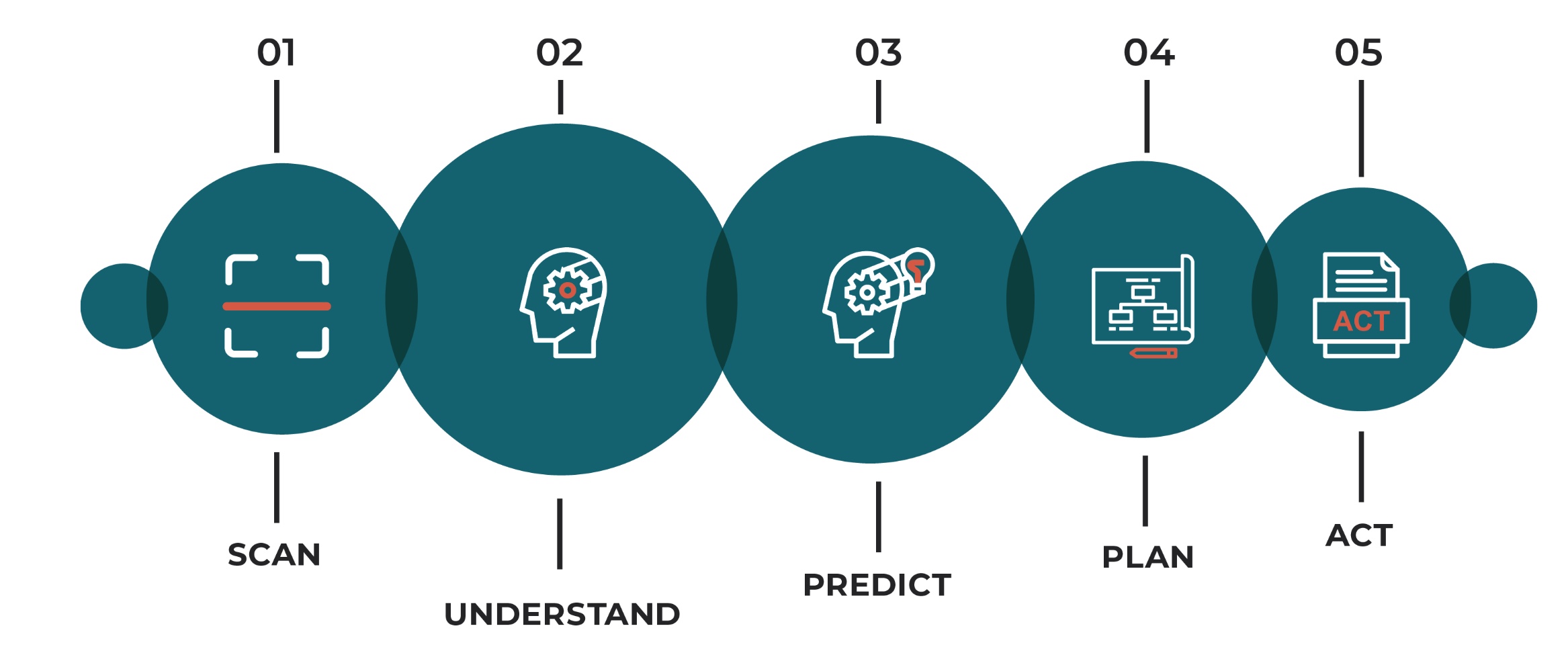
SUPPA™ (Scan – Understand – Predict – Plan – Act) Investigative Model
All human performance and interactions with systems come down to our human biology and so, every human failure traces back to the cognitive origins including mental processes of perception, memory, judgment and reasoning. To understand human behaviour, Integrated Human Factors (IHF) analyse these cognitive origins by using the SUPPA™ (Scan – Understand – Predict – Plan – Act) investigative model that is based on situation awareness research to facilitate the integration of human factors into incident investigation. Situational awareness describes a dynamic process where an individual takes in information from the outside world (Scan), makes sense of it (Understand) and then uses this information — in combination with their own knowledge — to Predict and Plan for what will happen next (Act). The process is dynamic as the individual’s awareness and knowledge of the situation and environment — their “mental model” — is being continually updated.
Be Prepared: Incident Investigations Are a Regulatory Requirement
It is required by law that organisations carry out accident and incident investigations and review risk assessments after incidents happen. Therefore, to fulfil that and act promptly, it is important to be prepared for such events.
Specific skillsets and expert knowledge underline an effective investigation. Organisations should have selected competent investigators that are ready to act. Whenever in doubt, professional advice should be sought from a chartered human factors consultancy company to enable a high-standard investigation process for your organisation.
IHF specialises in incident investigation and provides the IHF SaaS HF-AIR™ Software as a Service (SaaS) solution, that helps clients build their own in-house competency.