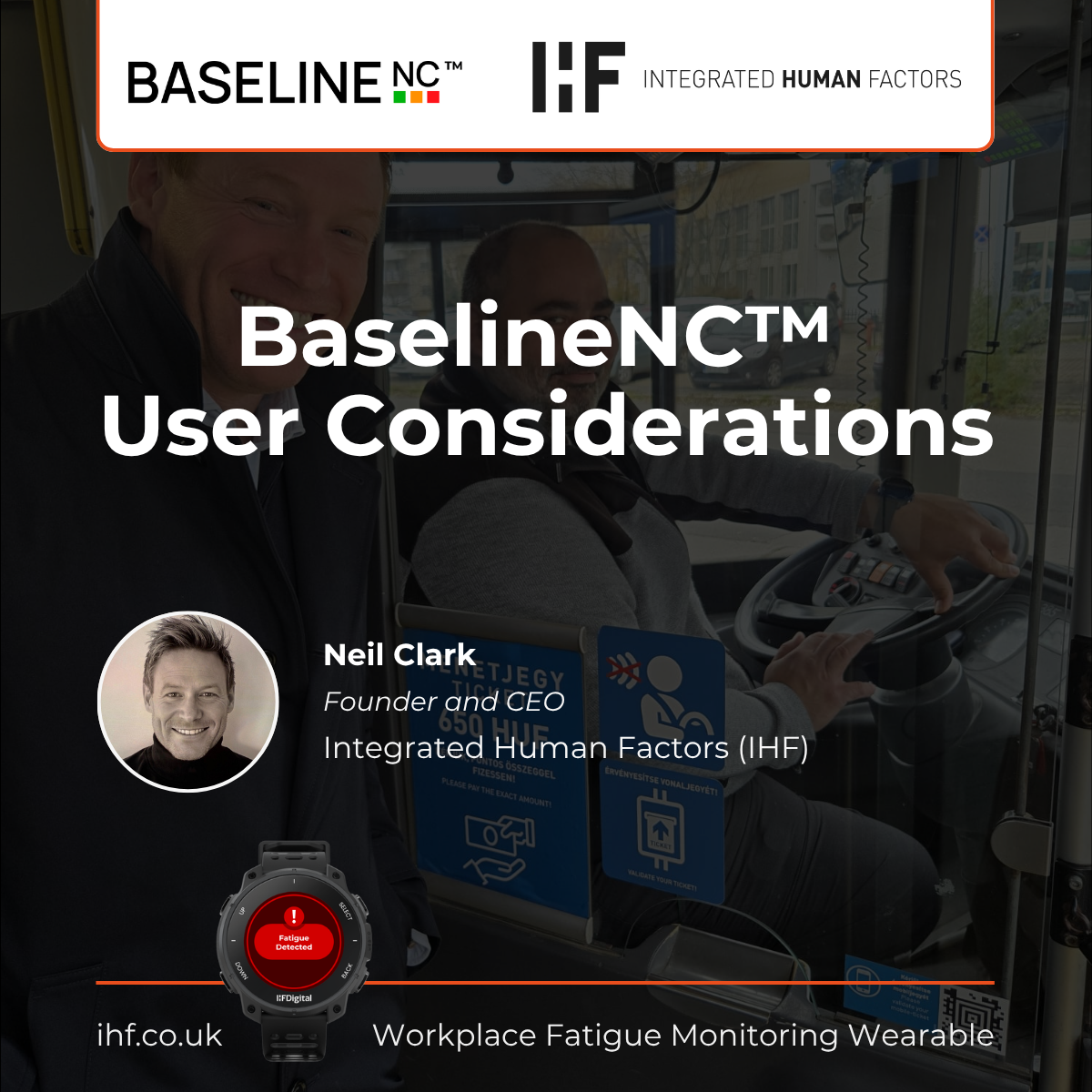
When IHF speak to clients and potential clients about the BaselineNC predictive fatigue detection system, a couple of user-related questions are regularly asked:
- How do users feel about wearing a wrist-worn device that collects biometric data?
- How do users feel about biometric data being used to detect fatigue and predict longitudinal well-being?
These questions, concerns and general user adoption points have been considered throughout the development of the BaselineNC system.
Generally, the system has been designed for the well-being of the user — as well as everyone else that could be impacted by a fatigue event — and should be considered as an added layer of personal protective equipment (PPE).
When users are engaged early on and brought along the journey, they understand this is for health and safety, and tend to give buy in. Unions require engagement early on — as IHF have done — and have endorsed the technology.
The biometric data collected from the energy-efficient, lightweight, mobile and unobtrusive wearable is only shared with the individual concerned through the Android™ or iOS® mobile application:
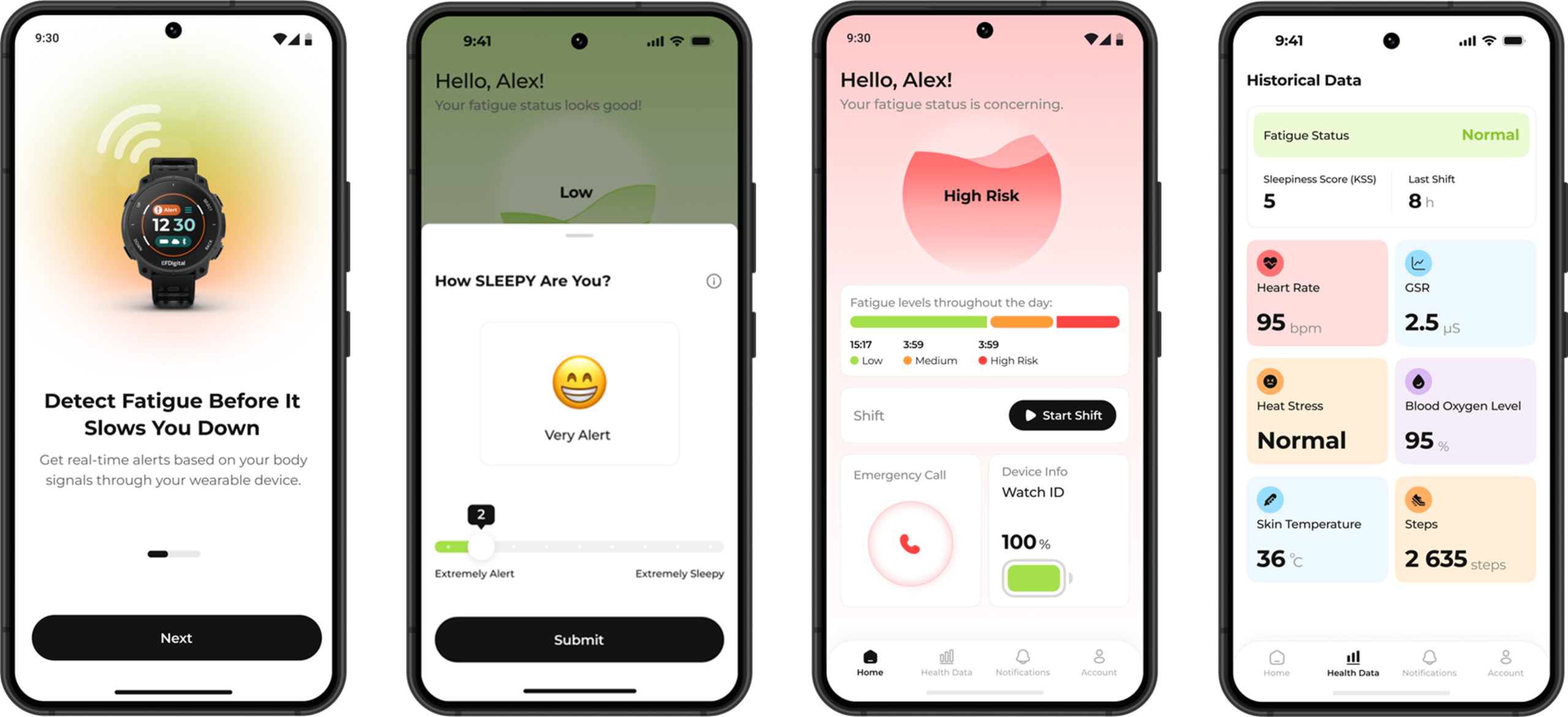
All data is encrypted in transit and in rest — end-to-end encryption (E2EE) — and complies with the highest standard of UK/EU GDPR rules.
A lot of care, effort and time has been put in by ergonomics and human factors experts to design a comfortable user interface that makes sense and means something to the user.
The “traffic light” RAG statuses — not the underlying biometric data — are also used for safety-critical control room alerts, dashboards and longitudinal operational insights for senior leadership.
Additionally, users are prompted at various times during a shift to enter a Karolinska Sleepiness Scale (KSS) score, enabling the correlation of real-time objective and intermittent subjective fatigue risk management data. Mitigating the dangers of self-assessed fatigue and the stigma attached to self-reporting fatigue.
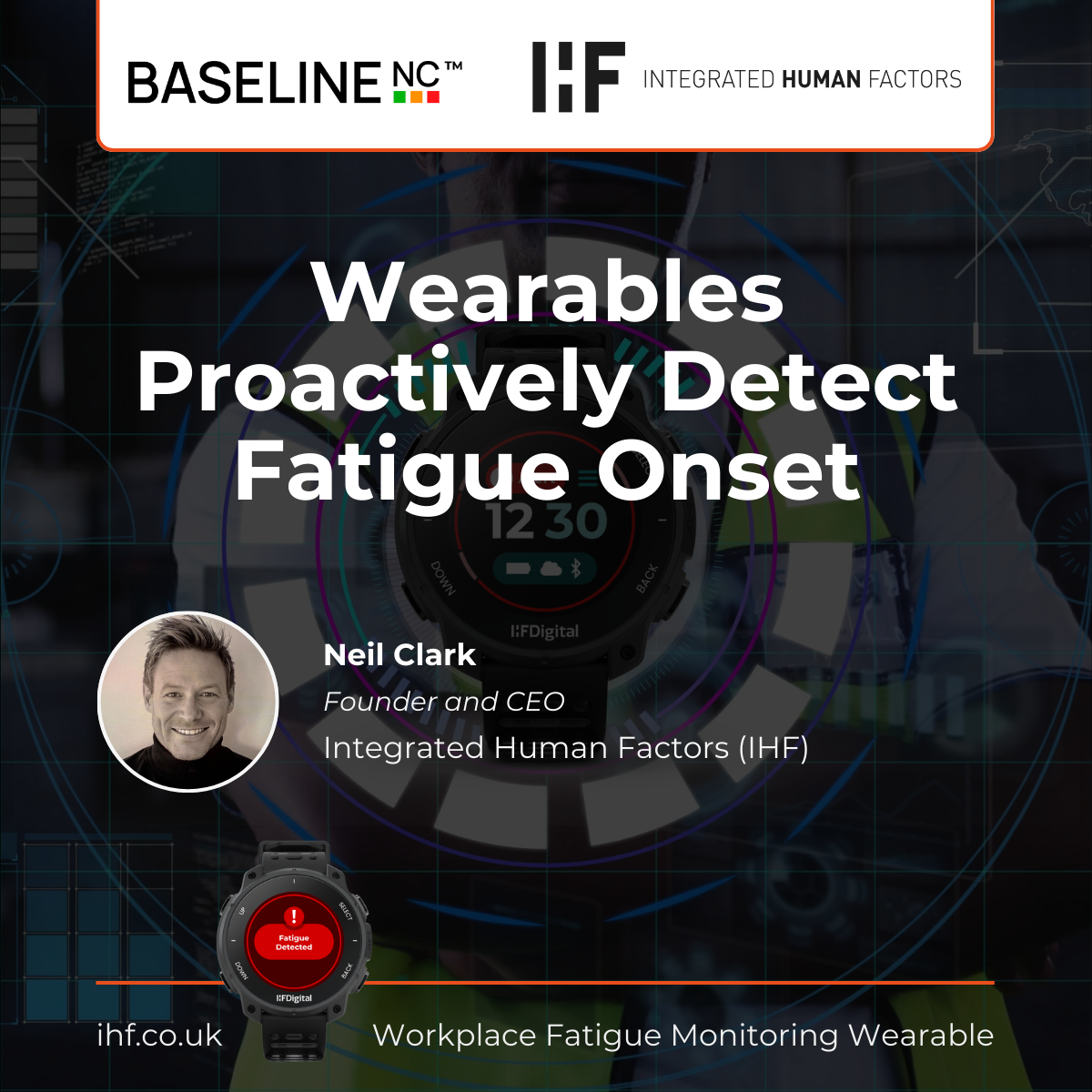
The BaselineNC workplace fatigue monitoring wearable is pushing the boundaries of fatigue detection with the objective and proactive analysis of biometric data.
Therefore, IHF have been front-footed and proactive about considering and involving BaselineNC users and trade union representatives in this incredibly important journey.
Connect with Neil on LinkedIn.
The BaselineNC workplace fatigue monitoring wearable project is also EIT Urban Mobility funded and was recently featured as part of the Impact Stories series: Wearable technology for human error prevention in transportation