IHF Training Courses
29th April, 2026 (Abu Dhabi, UAE): Understanding and Applying Human Factors and Ergonomics (HF/E) in Major Projects
IHF will be hosting this one-day training course in Abu Dhabi, UAE on 29th April, 2026.
This IHF training course addresses cross-industry HF/E considerations across the project life cycle, with key learning outcomes including the following:
- Understand the concept of HF/E and what it means in practice.
- Why and when HF/E should be applied in the project life cycle and how it should be integrated.
- Critical HF/E activities and artefacts required during the project life cycle.
The operational and commercial benefits of competently applying HF/E at the appropriate stages of projects.
This one-day training course in Abu Dhabi, UAE on 29th April, 2026 is open to individuals and groups from organisations at $990 (USD) per person.
Bookings: To book tickets and register for this training course, please click here.
Want to Book Through Your Organisation?
If you would like to book this training and be invoiced via your organisation, please contact IHF to discuss alternative payment options. We will be happy to arrange a group booking for your organisation and invoice to suit your requirements.
IHF Webinars
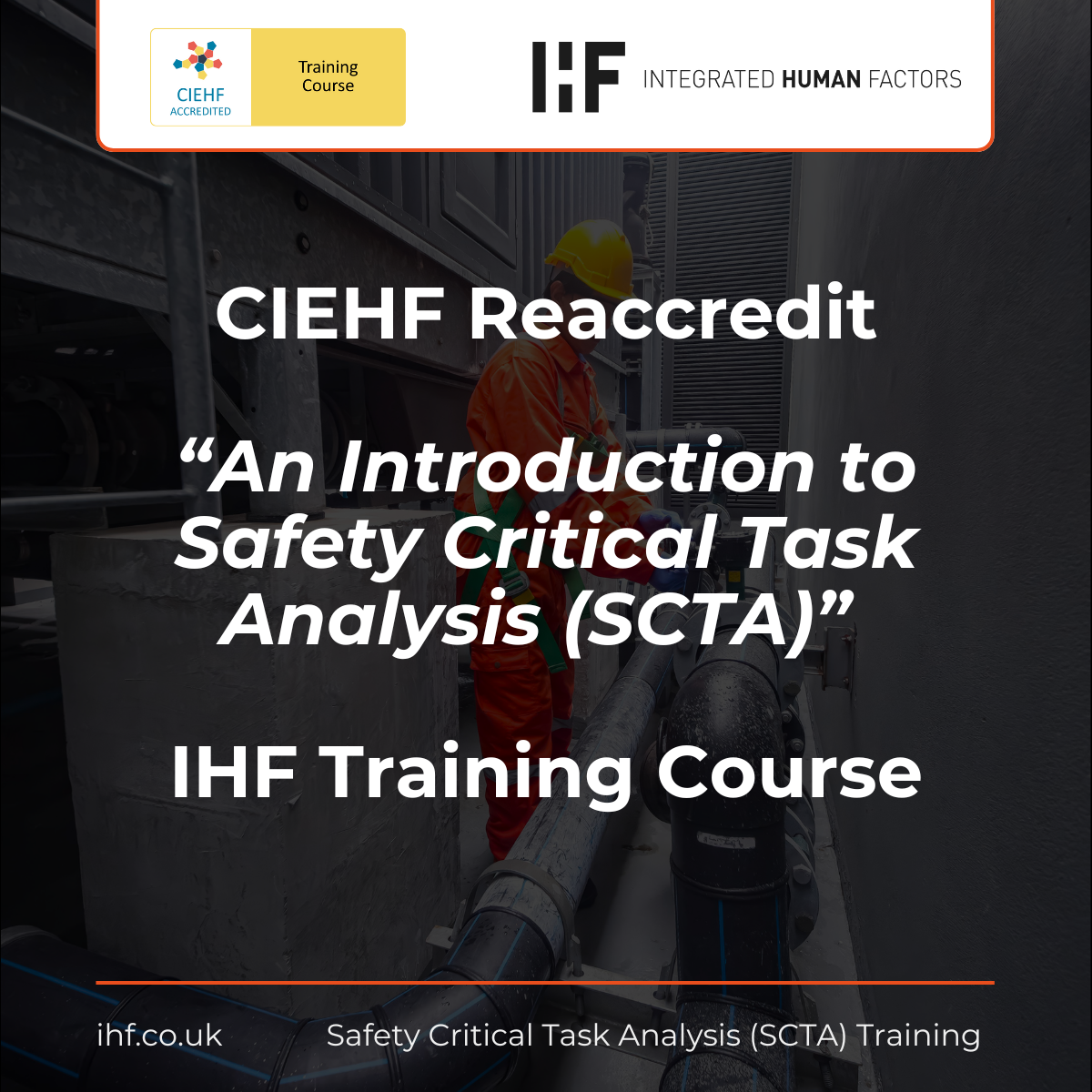
2nd April, 2026: An Introduction to Safety Critical Task Analysis (SCTA)
In safety-critical industrial operations, dangerous tasks that rely on people to undertake them have been a contributory factor in many accidents, incidents and near misses. According to the COMAH Competent Authority, operators should use risk assessment and findings from accident and incident investigations to gain a clear understanding of where and when they are vulnerable to human failure (COMAH-critical tasks), how those failures are likely to occur — accounting for the different types of human error — and the Performance Influencing Factors (PIFs) that make those human errors more likely. The fundamental purpose of SCTA is to identify areas in a task that are susceptible to human failure and could result in a major accident, as well as strengthening the controls in place to mitigate the risks.
In this webinar, Michael Shermon, C.ErgHF and Dr. Chizaram Nwankwo, C.ErgHF — human factors consultants at Integrated Human Factors (IHF) — will provide an overview of SCTA and how IHF — a registered consultancy with the Chartered Institute of Ergonomics and Human Factors (CIEHF) — can help an organisation implement and continuously develop a SCTA program. This includes CIEHF accredited training, human factors consultancy services and IHF SaaS TASC™ software. Providing integrated SCTA solutions, designed to mitigate accidents and incidents whilst meeting COMAH-critical tasks compliance — by human factors experts — in line with CIEHF, Energy Institute (EI), Health and Safety Executive (HSE), Human Performance Oil & Gas (HPOG) and International Association of Oil & Gas Producers (IOGP) guidelines.
Registration: To register for this live webinar, please click here.
30th April, 2026: An Introduction to Ergonomics Assessments
According to the Health and Safety Executive (HSE), it is imperative that tasks, equipment, information and the environment fit each worker to enable safe, effective and productive work systems. Poor ergonomic design can increase the risk of accidents, injuries and even fatalities. To mitigate these risks, organisations must comply with regulations such as the “The Health and Safety (Display Screen Equipment) Regulations 1992” and “The Manual Handling Operations Regulations 1992” in the UK, “Work Health and Safety Act 2010” in Australia, “Part II of the Canada Labour Code“, “Directive 90/270/EEC” in the European Union (EU) and the “General Duty Clause, Section 5(a)(1) of the OSH Act of 1970” in the USA. Additionally, an International Journal of Social Science Research and Review study found that the work environment has a positive influence on staff turnover. Without proactive ergonomics expertise, organisations are more exposed to these risks especially as work environments and technology continue to evolve.
In this webinar, Fabio Lemes dos Santos, C.ErgHF — Senior Human Factors Consultant at Integrated Human Factors (IHF) — will provide an overview of ergonomics assessments and how IHF — a registered consultancy with the Chartered Institute of Ergonomics and Human Factors (CIEHF) — can help an organisation achieve enterprise-wide, integrated and proactive ergonomic risk management.
Registration: To register for this live webinar, please click here.
28th May, 2026: Human Factors Integration in UI and UX Design for Digital Systems
Inadequately designed User Interfaces (UI) and User Experiences (UX) create hidden risks in safety-critical and high-reliability industries. When systems are not intuitive, consistent or designed around human cognitive and physical capabilities, organisations face increased human error, safety risks, operational inefficiencies, technostress, low staff satisfaction, higher turnover, technology adoption struggles and rising training costs. There are regulatory compliance, standards and guidance factors such as BS EN ISO 11064, IEC 62366-1:2015, IEC 62682:2022 and ISO 9241-210:2019 that focus on UI and UX considerations such as ergonomic human-centred design, human-machine interface (HMI) and management of alarm systems.
In this webinar, Dr. Chizaram Nwankwo, C.ErgHF and Jessica Bailey — Senior Human Factors Consultants at Integrated Human Factors (IHF) — will provide an overview of human factors integration in UI and UX Design for digital systems and how IHF — a registered consultancy with the Chartered Institute of Ergonomics and Human Factors (CIEHF) — can help an organisation achieve enterprise-wide, integrated and proactive ergonomic risk management. can help an organisation ensure technology solutions are intuitive, error-resilient and compliant with regulatory compliance, standards and guidance factors.
Registration: To register for this live webinar, please click here.
28th May, 2026: An Introduction to Incident Investigation
In safety-critical industrial operations, accident and incident investigations managed using paper, spreadsheets and word documents can lead to problems such as auditability, control, incompleteness and reportability to regulators. This grows in complexity when organisations operate multiple sites without consistent and repeatable processes, intelligent trending and visibility of accidents/incidents. According to the COMAH Competent Authority, learning from incidents and accidents is important to ensure organisations prevent future similar incidents. After an accident/incident involving human failure, the investigation into the causes and contributing factors often makes little attempt to understand why the human failures occurred. Determining both the immediate and the underlying cause of an accident/incident is the key to preventing similar occurrences through the design of effective control measures and organisational learning.
In this webinar, Aidan Henderson, MSc — Senior Human Factors Consultant at Integrated Human Factors (IHF) — will provide an overview of ergonomics assessments and how IHF — a registered consultancy with the Chartered Institute of Ergonomics and Human Factors (CIEHF) — can help an organisation facilitate the integration of human factors into incident investigation — and as a result — identify and learn from trends, leading to proactive steps and targeted investment to reduce costs and mitigate accidents.
Registration: To register for this live webinar, please click here.
Future Events
12th May, 2026 (Edinburgh, Scotland): ScORSA Mock Public Inquiry & Occupational Road Risk Summit 2026
The Scottish Occupational Road Safety Alliance (ScORSA) is bringing transport, safety and fleet professionals together for a fully immersive, hands-on learning experience focused on Managing Occupational Road Risk at the COSLA Conference Centre in Edinburgh, Scotland on 12th May, 2026.
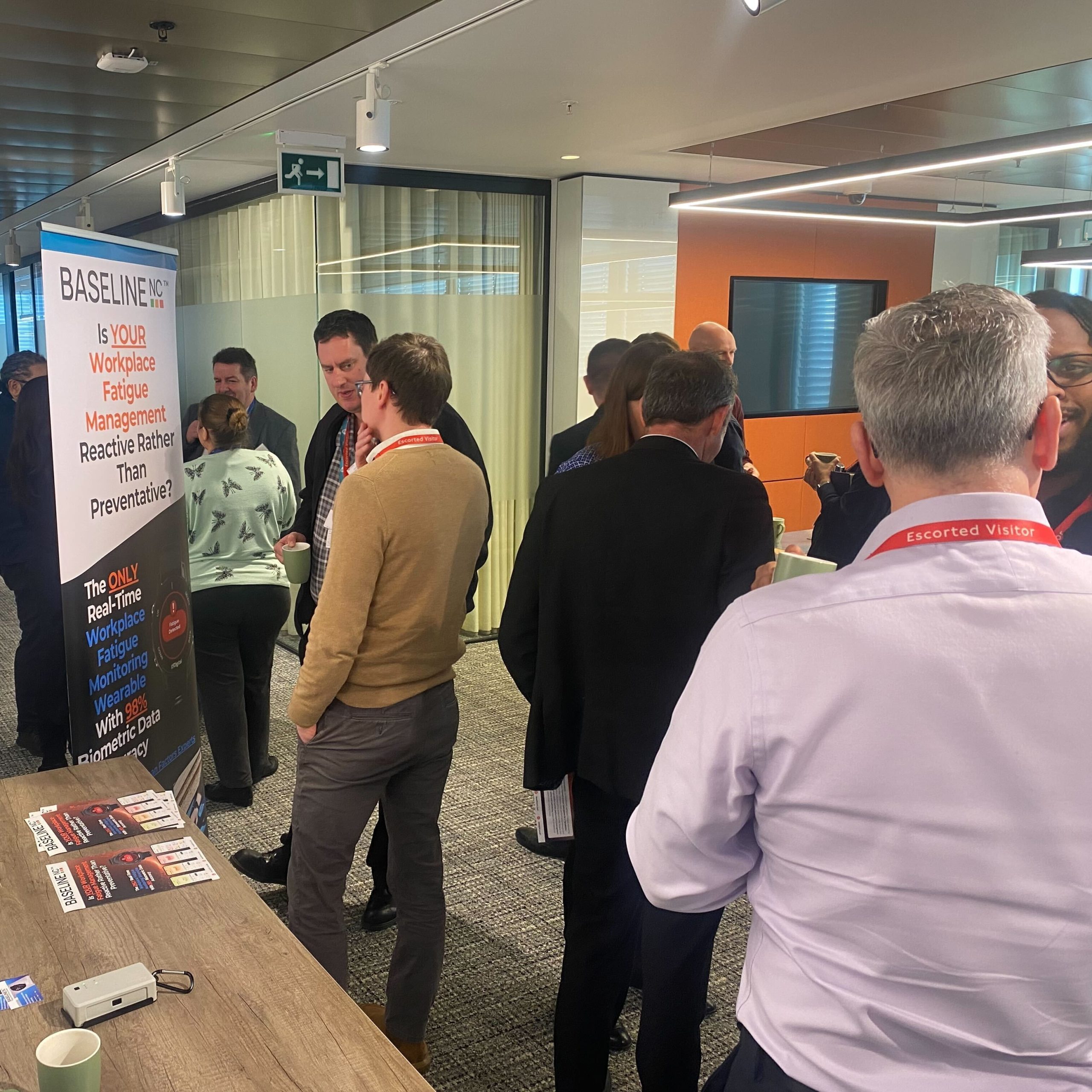
IHF will be exhibiting the BaselineNC™ workplace fatigue monitoring wearable at the Occupational Road Risk Summit that allows delegates to take part in interactive learning stations, demonstrations and expert-led discussions designed to strengthen compliance, reduce risk and elevate safety culture across your organisation.
Registration: For further information and how to register, please visit the ScORSA website.